Your Smart Watch Knows You're Exhausted—Now What?
Health Focus Team
Published
Why is your smartwatch recovery score always low? Learn how wearables track invisible fatigue, orthosomnia, and women's hormonal health data.
Written by: Health Focus Research Team Medically Reviewed by: Dr. Priya Sharma, MBBS, MD – Board-Certified Endocrinologist & Health Specialist Last updated: February 28, 2026 | Reading time: 8 minutes
⚠️ Medical Disclaimer: This article is for educational purposes only and is not a substitute for professional medical advice. Always consult a qualified healthcare provider.
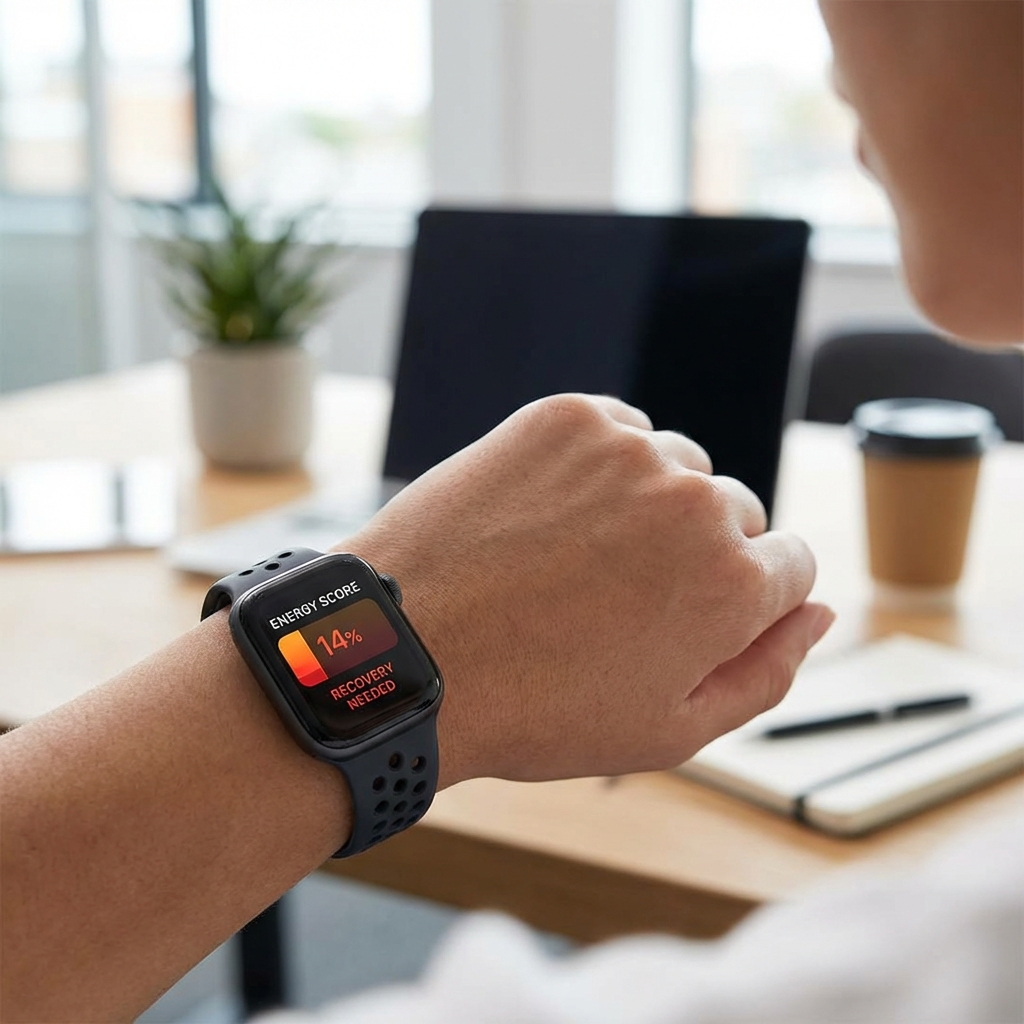
Your smartwatch just buzzed with a notification: "Your recovery score is 42. Consider taking it easy today." You glance at it while rushing to your third meeting of the morning, coffee in hand, mentally cataloging everything you still need to accomplish before picking up the kids.
The watch says you're exhausted. You already knew that. But here's what's different in 2025: these devices are finally catching up to what women's bodies actually need—and the data they're collecting might be the key to getting doctors to finally listen.
The Wearable Revolution Is Personal Now
About one-third of U.S. adults regularly use wearable healthcare devices, and this number is climbing fast. The wearables market is projected to grow from roughly $52 billion in 2024 to nearly $190 billion by 2032, driven by demand for hyper-personalized health insights and efforts to integrate trackers into healthcare and corporate wellness (Athletech News, 2025).
But what's really changed isn't just the hardware—it's what these devices can actually do. Leading brands spent 2025 turning rings, watches, and sensors into broader health platforms built around stress, sleep, biomarkers, and AI guidance. More than 70% of wearable users are women, and they're using these devices not just to count steps but to track invisible fatigue, monitor sleep patterns, manage stress levels, and advocate for their health (PatentPC, 2025). When juggling demanding professional and personal roles, being able to quantify that hidden exhaustion into actionable metrics changes everything.
The women's health segment is one of the fastest-growing sectors in the wearable industry, with a compound annual growth rate of 15.2%. This surge reflects growing awareness around personalized healthcare and the reality that women are looking for devices that provide actionable insights into their overall wellbeing, not just surface-level data (PatentPC, 2025).
What Your Wearable Actually Knows About You
Modern wearables track an impressive array of biometrics. The Oura Ring 4, for example, tracks over 20 biometrics including heart rate, blood oxygen levels, body temperature, daily movement, stress levels, and sleep quality (Best Wearable Health Monitoring Devices, 2025).
But tracking isn't the same as understanding. What's revolutionary about 2025's devices is how they're interpreting this data specifically for women's health needs.
Oura introduced Cumulative Stress, a long-term biomarker that blends heart response, sleep continuity, temperature variation, and movement to show how the body accumulates and clears stress over roughly a month instead of a single day (Athletech News, 2025). This matters because women's stress patterns often look different from men's—it builds gradually, compounds over time, and doesn't always show up in a single day's metrics. For instance, if you constantly wonder, "why is my smartwatch recovery score low?", it might simply be your luteal phase. During the time after ovulation and before your period, your resting heart rate naturally increases and heart rate variability (HRV) typically drops. Smart algorithms are finally starting to recognize these natural hormonal cycle shifts instead of falsely warning you that you're sick or overtraining.
Ultrahuman's acquisition of viO HealthTech led to Cycle & Ovulation Pro, a Ring Air subscription upgrade that adapts OvuSense algorithms to confirm ovulation with over 90% accuracy, including for users with irregular cycles (Athletech News, 2025). This is huge for women who've been dismissed by doctors who claim their cycles are "probably fine" when they know something feels off.
The Pregnancy Monitoring Breakthrough
Perhaps the most exciting development is how wearables are transforming pregnancy monitoring. Scientists at Scripps Research found preliminary evidence suggesting that common wearable devices like the Apple Watch, Garmin, and Fitbit could remotely monitor pregnancy-related health changes by tracking physiological patterns like heart rate that correlate with hormonal fluctuations (Scripps Research, 2025).
The research, published in The Lancet eBioMedicine in August 2025, showed that heart rate data during early pregnancy initially decreased around weeks five to nine, then steadily increased until about eight or nine weeks before delivery, reaching peaks up to 9.4 beats per minute above pre-pregnancy levels. After birth, heart rate dropped below baseline levels before stabilizing around six months postpartum.
This matters enormously because more than 2 million people in the U.S. live in maternal care deserts. As researchers noted, wearable devices offer a unique opportunity to develop innovative solutions that address the high number of adverse pregnancy outcomes in the U.S. (Scripps Research, 2025).
Hormones play a key role in pregnancy outcomes, and discovering the association between heart rate and hormone changes could unlock new ways to predict the beginning of pregnancy or identify signs of adverse outcomes such as gestational diabetes or preeclampsia (Scripps Research, 2025).
In an exploratory analysis, pregnancies ending in adverse outcomes like miscarriage or stillbirth showed different heart rate patterns compared to healthy pregnancies, though more research with larger sample sizes is needed to validate these observations.
The Clinical Integration That Changes Everything
Wearables are moving beyond wellness tools into clinical contexts. Maven Clinic is integrating Oura biometrics into virtual women's health care, using ring data to support journeys from fertility through postpartum recovery (Athletech News, 2025).
This integration matters because it addresses a fundamental problem in women's healthcare: the gap between how women feel and what doctors can measure during brief office visits. Traditional healthcare relies on snapshots taken during appointments—your blood pressure in that moment, your weight on that day. Wearables provide continuous data, offering a more complete picture of patient health (Sermo, 2025).
This is particularly powerful for conditions like perimenopause and menopause, where symptoms fluctuate dramatically. Instead of trying to explain to your doctor that you had terrible night sweats three nights last week but not last night, you can show them months of sleep and temperature data proving the pattern.
The Accuracy Question
Before you rush to make health decisions based solely on your smartwatch data, it's important to understand the limitations. A comprehensive review published in npj Cardiovascular Health in 2025 examined the accuracy of consumer-grade wearables across different health parameters.
The findings? Wearables can reliably track steps and heart rate. Sleep monitoring using heart rate and accelerometer signals has moderate accuracy compared to polysomnography, though wearables often overestimate sleep because they misclassify quiet wakefulness as sleep (News-Medical, 2025). There's also the psychological factor: a growing number of users experience "orthosomnia"—an unhealthy obsession with achieving perfect sleep scores. This wearable-induced health anxiety can actually keep you awake, proving that sometimes the pressure to recover actively prevents you from doing so.
Stress detection based on heart rate variability, respiratory rate, and electrodermal activity can be affected by motion artifacts that reduce reliability. Women's health features such as cycle and ovulation tracking leverage heart rate variability, temperature, and respiratory changes, with growing evidence for reasonable accuracy (News-Medical, 2025).
Blood pressure estimation using wearables remains challenging. Cuffless approaches can require calibration against traditional blood pressure cuffs, and accuracy varies between devices and populations.
The key takeaway? Wearable devices provide accessible and scalable health insights, but their accuracy varies by parameter, activity, population group, and device, underscoring the need for continued validation before widespread clinical adoption (News-Medical, 2025).
How to Actually Use This Data
Having data is one thing. Using it effectively is another. Here's how to make your wearable work for you, not just stress you out with more numbers to worry about.
First, look for patterns over time, not daily fluctuations. One day of poor sleep or high stress isn't meaningful. A month-long trend absolutely is. Modern devices are getting better at this—Oura's Cumulative Stress metric, for example, shows patterns over weeks rather than days.
Second, use the data to advocate for yourself with healthcare providers. When your doctor dismisses your concerns about irregular periods or persistent fatigue, having months of objective data about temperature variations, sleep disruptions, and heart rate patterns gives you concrete evidence. Print it out. Bring it to your appointment. Make them look at it.
Third, pay attention to what correlates with what. Does your stress score spike before your period? Does your sleep quality tank when you eat late? These patterns can help you identify triggers and make informed changes.
Fourth, don't let the data replace listening to your body. If your watch says your recovery score is good but you feel terrible, trust how you feel. The data is meant to complement your experience, not override it.
The Features Actually Worth Using
Not all wearable features are created equal. Based on current research and user outcomes, here's what's actually valuable for working women:
- Sleep tracking remains one of the most useful features. Understanding your sleep stages, identifying disruptions, and tracking how lifestyle changes affect your rest can have significant impacts on overall health and energy levels.
- Menstrual cycle tracking has become increasingly sophisticated. Beyond just predicting your period, modern wearables can identify patterns in energy, mood, and physical symptoms across your cycle. This information can help you plan important meetings, workouts, and rest days more strategically.
- Stress and recovery metrics give you objective feedback about whether you're actually recovering or just pushing through. This is particularly valuable for women who've been socialized to ignore their body's signals and keep going no matter what.
- Heart rate variability tracking can provide early warning signs of illness, overtraining, or chronic stress. Changes in HRV often precede symptoms you can feel, giving you a heads-up to adjust before you get sick.
The Privacy Consideration
Before you sync every aspect of your health data to the cloud, consider the privacy implications. These devices collect intimate information about your body, habits, and health. Make sure you understand what data is being shared, who has access to it, and how it might be used.
Read the privacy policies. Understand what happens if you cancel your subscription. Consider whether employer-sponsored wellness programs that use wearable data truly protect your privacy or could potentially be used against you.
The Future Is Already Here
The trajectory is clear: wearables are becoming more accurate, more specialized, and more integrated into healthcare systems. By 2026, the key questions will center on how these systems are governed, validated, and priced, and where regulators draw the line between wellness tools and medical devices (Athletech News, 2025).
For women, this evolution holds particular promise. Conditions like endometriosis, PCOS, perimenopause, and postpartum depression have historically been underdiagnosed and undertreated in part because they're hard to measure in a 15-minute office visit. Continuous monitoring via wearables could finally provide the objective data needed to validate women's experiences and drive better care.
What To Do With Your Exhaustion Data
So your watch says you're exhausted. Now what?
First, believe it. Women are conditioned to push through, to not trust their tiredness, to feel like they should be able to do more. The data gives you permission to acknowledge that you're actually depleted, not just being lazy.
Second, use it strategically. If your recovery score is consistently low, that's information. Maybe you need to have a conversation with your partner about the mental load. Maybe you need to talk to your doctor about underlying health issues. Maybe you need to set better boundaries at work.
Third, track what helps. Try going to bed earlier for a week and see if your recovery scores improve. Experiment with saying no to that extra committee. Notice what actually moves the needle on your stress and recovery metrics.
Finally, remember that the goal isn't perfect scores. The goal is understanding your body well enough to make informed decisions about your health, your energy, and your life.
Your smartwatch knows you're exhausted. The question is: what are you going to do about it?
Frequently Asked Questions
Why is my smartwatch recovery score always low during certain times of the month? Many women notice their recovery scores tank in the days leading up to their period. This happens during the luteal phase, when your resting heart rate naturally rises and your heart rate variability (HRV) drops. Standard algorithms often misinterpret these healthy hormonal shifts as signs of illness or poor recovery.
Can my smartwatch actually make me feel more exhausted? Yes. Constantly tracking your metrics can lead to "orthosomnia," a condition where you become obsessively preoccupied with getting perfect sleep or recovery scores. This hyper-vigilance and wearable-induced health anxiety can paradoxically increase stress and make you feel more drained.
Why is my smartwatch telling me I'm stressed when I feel fine? Most devices use heart rate and HRV to estimate stress, but they cannot distinguish between different types of arousal. Your watch might flag you as "stressed" because your heart rate increased from excitement, laughing, or even a brisk walk to the kitchen. Always cross-reference the data with how you actually feel.
References:
- Athletech News. (2025). How Wearables Are Evolving From Fitness Trackers to Health Systems.
- PatentPC. (2025). Wearables in Women's Health: Growth & Adoption.
- Best Wearable Health Monitoring Devices. (2025). The Thryve Health.
- Scripps Research. (2025). Wearable devices could revolutionize pregnancy monitoring and detect abnormalities.
- News-Medical. (2025). Wearable health trackers reveal how accurate your smartwatch really is.
- Sermo. (2025). Wearable health devices: examples & 2025 technology trends.
- TechInsights. Five Key Trends for Wearables in 2025.
- Medical Daily. (2025). Wearable Tech Health Guide 2025: The Best Devices and Innovation Gadgets Worth Buying.
- UPMC HealthBeat. (2025). How Wearable Tech Improves Fitness and Health Tracking.
- The Business Legacy. (2025). Inside 2025's Smart Medical Wearables: Top Devices.
Medical Disclaimer: This article is for informational purposes only and does not constitute medical advice. Always consult a qualified healthcare provider.
Frequently Asked Questions
Why is my smartwatch recovery score always low during certain times of the month?
Many women notice their recovery scores tank in the days leading up to their period. This happens during the luteal phase, when your resting heart rate naturally rises and your heart rate variability (HRV) drops. Standard algorithms often misinterpret these healthy hormonal shifts as signs of illness or poor recovery.
Can my smartwatch actually make me feel more exhausted?
Yes. Constantly tracking your metrics can lead to "orthosomnia," a condition where you become obsessively preoccupied with getting perfect sleep or recovery scores. This hyper-vigilance and wearable-induced health anxiety can paradoxically increase stress and make you feel more drained.
Why is my smartwatch telling me I'm stressed when I feel fine?
Most devices use heart rate and HRV to estimate stress, but they cannot distinguish between different types of arousal. Your watch might flag you as "stressed" because your heart rate increased from excitement, laughing, or even a brisk walk to the kitchen. Always cross-reference the data with how you actually feel.