Your Office's Thermostat War Just Got Legal: The Menopause Revolution at Work
Health Focus Team
Published
Rhode Island is the first US state to mandate workplace accommodations for menopause. Learn what the landmark law means for employers and employees.
Written by: Health Focus Research Team Medically Reviewed by: Dr. Michael Chen, MD, FACC – Preventive Cardiologist & Men's Health Specialist Last updated: February 28, 2026 | Reading time: 8 minutes
⚠️ Medical Disclaimer: This article is for educational purposes only. Testosterone levels and men's hormonal health should be evaluated by a qualified physician. Do not self-treat based on this article.
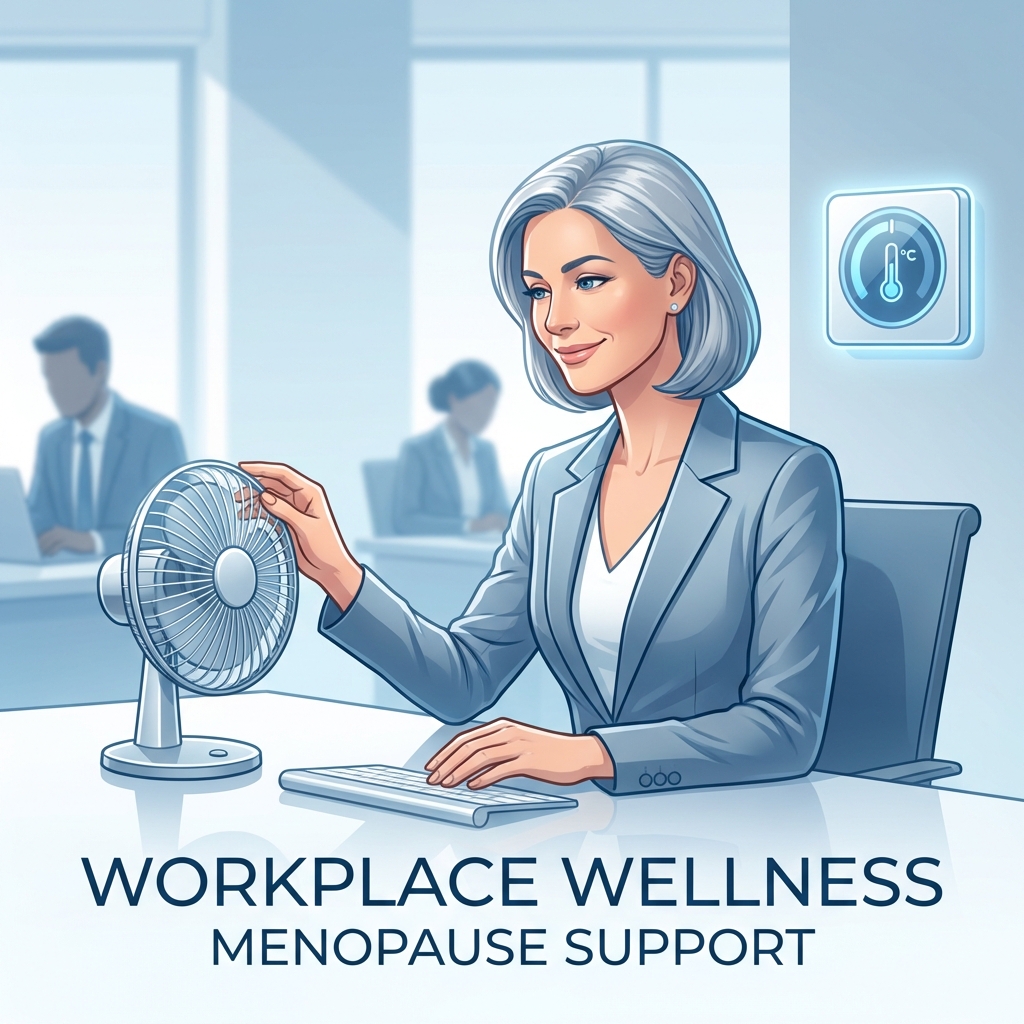
For years, she'd been pulling her blazer on and off like a frustrated magician. One minute freezing, the next drenched in sweat during a client presentation. Her colleagues joked about her desk fan collection. She laughed along, but inside, she was calculating how many more years until retirement.
Then Rhode Island changed everything.
The Landmark Law That Made History
On June 24, 2025, Rhode Island became the first state in the nation to explicitly require employers to provide workplace accommodations for applicants and employees experiencing menopause and related medical conditions (Littler, 2025). This isn't a suggestion or a best practice recommendation—it's the law.
Governor Daniel McKee signed House Bill 6161, amending the Rhode Island Fair Employment Practices Act to include menopause, perimenopause, and related conditions as protected categories. The law requires employers with four or more employees to engage in a timely, good-faith interactive process to identify reasonable accommodations—just as they would for pregnancy or other medical needs (CBIA, 2025).
Think about that for a moment. Menopause—a natural biological process that affects roughly half the population—is finally being recognized as something that deserves legal workplace protection.
Why This Matters Now
Menopause isn't some niche issue affecting a small number of women. Research indicates that women can spend up to one-third of their lives in perimenopause or postmenopause. With women making up nearly half of the U.S. workforce, millions are navigating menopause symptoms while trying to maintain their careers.
Yet until now, menopause itself generally hasn't qualified as a disability under the Americans with Disabilities Act because it's a natural consequence of aging (HR Source, 2025). This created a murky situation where women experiencing debilitating symptoms had limited legal recourse for requesting accommodations.
The symptoms can be severe and disruptive. Hot flashes and night sweats—what the Rhode Island law formally refers to as "vasomotor symptoms"—are just the beginning. Women may experience sleep disruptions, migraine headaches, brain fog, anxiety, and mood changes that significantly interfere with their ability to work (HR Source, 2025).
Imagine trying to lead a high-stakes meeting while experiencing a hot flash so intense you're visibly sweating. Or attempting to focus on complex analysis when brain fog makes even simple calculations feel impossible. These aren't minor inconveniences—they're real health symptoms that can impact job performance and career trajectory.
Legal Requirements for Menopause Support in the Workplace
The Rhode Island law doesn't mess around with vague recommendations. It has specific, enforceable requirements that employers must follow for supporting employees through the menopause transition.
First, employers must engage in the interactive process to determine appropriate accommodations unless doing so would cause undue hardship. The law prohibits employers from denying employment opportunities based on the need for menopause-related accommodations, and they cannot require employees to take leave if another reasonable accommodation can be provided (National Law Review, 2025).
When looking for examples of workplace accommodations for menopause symptoms, legal guidance mentions flexible scheduling to manage fatigue or sleep disturbances, access to temperature-controlled environments for addressing brain fog and hot flashes at work, and remote work options during symptom flare-ups (Labor & Employment Law Blog, 2025).
Second, there are posting and notice requirements. Employers must conspicuously post a written notice in the workplace advising employees of their rights concerning menopause and related medical conditions. They must provide written notice to new employees at the start of employment, notify all existing employees by October 22, 2025, and provide notice within 10 days of any employee reporting menopause symptoms (HR Morning, 2025).
The Rhode Island Commission for Human Rights has made a model notice available, taking the guesswork out of compliance.
How This Differs from Existing Laws
Legal experts note that Rhode Island's law differs from the federal Pregnant Workers Fairness Act and EEOC implementing rules in several key ways. Specifically, the new menopause accommodation law does not require employers to temporarily excuse the performance of essential job functions, does not limit an employer's ability to request medical documentation, and does not include specific examples of menopause accommodations that are generally considered reasonable (HR Morning, 2025).
This approach gives employers and employees flexibility to determine what works for their specific situations while still providing clear legal protection.
Notably, reasonable accommodations are required even if the employee or applicant is not disabled by menopause or a related medical condition (Littler, 2025). This is a significant departure from the ADA framework, which requires a qualifying disability.
Why Rhode Island Went First
Rhode Island's move didn't happen in a vacuum. It reflects a growing recognition that menopause is not merely a personal health issue but a workplace equity issue (CBIA, 2025).
The law regarding reasonable accommodations for pregnancy, childbirth, and related medical conditions evolved gradually at state and local levels before the federal Pregnant Workers Fairness Act went into effect in June 2023. Legal experts expect menopause accommodations to follow a similar path, with more states likely to adopt similar legislation (HR Morning, 2025).
Gregory Tumolo, a shareholder at Littler Mendelson specializing in labor and employment law, told HR Morning that federal action is unlikely in the near term. He expects the law regarding workplace protections for employees experiencing menopause to continue evolving primarily at the state level.
Menopause-Friendly Workplace Policies for Employers
Here's something that often gets lost in these discussions: accommodating menopause isn't just legally required in Rhode Island—it's good business.
When figuring out how to provide reasonable accommodations for menopause, companies often find that these adjustments are practical and beneficial. Creating an inclusive work environment for menopausal employees is often low-cost and may improve productivity, attendance, and morale. Examples include remote work options, flexible schedules, and adjustments to office temperature, ventilation, lighting, or dress codes (HR Source, 2025).
Think about the cost of replacing an experienced employee versus installing a desk fan or allowing flexible hours. The math isn't complicated.
Tumolo highlighted several proactive reasons for employers to adopt menopause accommodation policies: they support employees and culture by showing that the employer values health and wellness at all life stages; they increase retention and productivity because employees who feel supported while managing menopause are more likely to stay engaged and loyal; and they manage risk through informed policy decisions (HR Morning, 2025).
How to Request Menopause Accommodations at Work
For women managing menopause symptoms in the workplace, the Rhode Island law represents a fundamental shift. Instead of suffering in silence or cobbling together workarounds, they now have legal standing to know exactly how to request menopause accommodations at work.
This doesn't mean every request will be granted—employers can still demonstrate undue hardship—but it shifts the conversation from "Can I ask?" to "I have the right to ask."
The law also helps destigmatize menopause in the workplace. By explicitly naming it as a protected condition, Rhode Island is sending a message that menopause is a normal part of life that deserves recognition and support, not something women should hide or power through alone.
The Ripple Effect
Other legislatures around the country are considering similar laws, suggesting there may be a wave of state legislation in the coming years (CBIA, 2025). Multistate employers may face varying requirements for menopause accommodations, making it crucial for HR teams to stay informed and prepare policies that are ahead of the curve (HR Morning, 2025).
Even in states without specific menopause accommodation laws, the trend toward recognition and support is growing. Employers who get ahead of this curve—by implementing thoughtful policies now—will be better positioned as expectations evolve.
The Department of Labor has published guidance on menstruation and menopause at work, noting that while implementation of many accommodations is not required by law, they reflect topics that employers and employees may want to address (DOL, 2025). The guidance suggests that employees who feel supported can continue to thrive in the workplace through the menopause transition, and this support can strengthen the labor force as a whole by facilitating greater retention.
Beyond Legal Compliance
The most profound impact of Rhode Island's law may not be legal—it may be cultural. By making menopause a protected workplace condition, the state is normalizing conversations that have been taboo for too long.
Women who previously suffered through meetings while managing symptoms now have language and legal backing to ask for support. Employers who once viewed menopause as a private matter now understand it as a workplace consideration requiring thoughtful accommodation.
This shift matters because, as the law acknowledges, menopause and related conditions can create genuine barriers to workplace participation and success. By removing those barriers through reasonable accommodations, employers don't just comply with the law—they create more equitable, inclusive workplaces where women can thrive across their entire careers.
Looking Ahead
Rhode Island's menopause accommodation law is just the beginning. As awareness grows and more states consider similar legislation, workplace norms around menopause are likely to shift significantly.
For employers, the smart move is to review accommodation policies now, train HR and management teams on handling menopause-related requests with professionalism and empathy, and foster workplace cultures where health discussions aren't taboo.
For women experiencing menopause symptoms, the message is clear: you don't have to suffer in silence anymore. You have rights, you have options, and increasingly, you have legal protection.
The thermostat war isn't just about comfort—it's about equity, health, and recognizing that women's bodies change throughout their careers. And now, at least in Rhode Island, it's the law.
Frequently Asked Questions
Does the Rhode Island menopause law apply to all employers? The law generally applies to employers as defined under the Rhode Island Fair Employment Practices Act, which typically includes companies with four or more employees.
What if an employer refuses to provide an accommodation? Employees can file a complaint with the Rhode Island Commission for Human Rights if they feel they've been denied a reasonable accommodation or discriminated against under this new legal framework.
Are there similar laws in other states? As of early 2026, Rhode Island remains a pioneer with this specific legislation. However, a ripple effect is happening, and other states (like California) are introducing proposals to update their anti-discrimination laws to explicitly include menopause.
References:
- Littler. (2025). Rhode Island Becomes First State to Mandate Workplace Accommodations for Menopause.
- CBIA. (2025). RI First to Explicitly Include Menopause as Protected Condition.
- HR Source. (2025). Is Menopause Protected in the Workplace?
- National Law Review. (2025). Menopause as Protected Condition Explicitly Included in First Law.
- Labor & Employment Law Blog. (2025). "It's Getting Hot in Here" – Rhode Island's New Workplace Accommodations for Menopause.
- HR Morning. (2025). New Menopause Accommodation Law: Next Steps for HR Leaders.
- U.S. Department of Labor. (2025). Menstruation, Menopause and Work.
- Kenney & Sams, PLLC. (2025). Rhode Island Amends Two Existing Employment Laws Regarding Hiring Documentation and Menopause-Related Protections.
Medical Disclaimer: This article is for informational purposes only and does not constitute medical advice. Always consult a qualified healthcare provider.
Frequently Asked Questions
Does the Rhode Island menopause law apply to all employers?
The law generally applies to employers as defined under the Rhode Island Fair Employment Practices Act, which typically includes companies with four or more employees.
What if an employer refuses to provide an accommodation?
Employees can file a complaint with the Rhode Island Commission for Human Rights if they feel they've been denied a reasonable accommodation or discriminated against under this new legal framework.
Are there similar laws in other states?
As of early 2026, Rhode Island remains a pioneer with this specific legislation. However, a ripple effect is happening, and other states (like California) are introducing proposals to update their anti-discrimination laws to explicitly include menopause.