The Mental Load Is Real, and It's Literally Making You Sick
Health Focus Team
Published
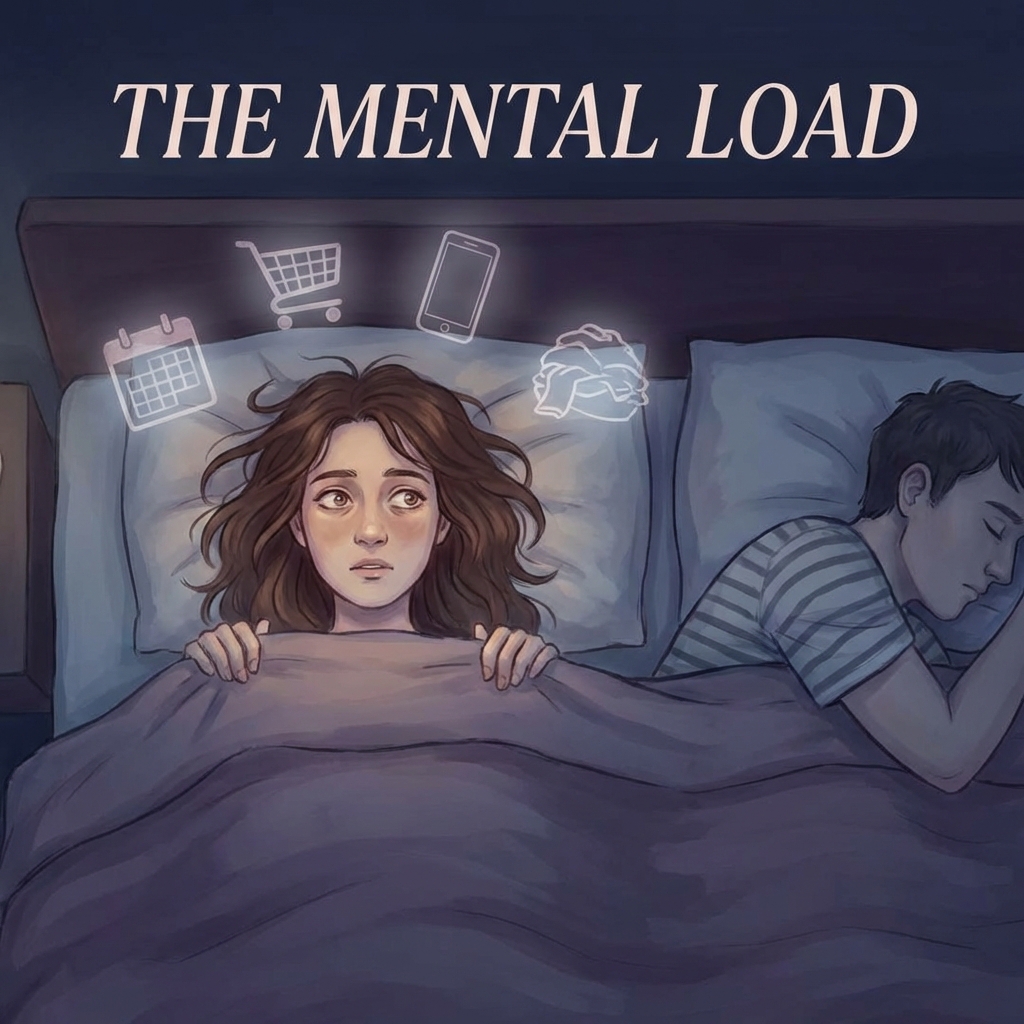
The 'mental load' is invisible labor that impacts women's health. Learn the signs of burnout, how to explain it to your partner, and ways to reduce cognitive overload.
Written by: Health Focus Research Team Medically Reviewed by: Dr. Michael Chen, MD, FACC – Preventive Cardiologist & Men's Health Specialist Last updated: February 28, 2026 | Reading time: 8 minutes
⚠️ Medical Disclaimer: This article is for educational purposes only. Testosterone levels and men's hormonal health should be evaluated by a qualified physician. Do not self-treat based on this article.
It's 11 PM on a Tuesday. You're lying in bed, exhausted, but your mind is racing: Did I sign the permission slip? When's the last time we changed the air filter? Mom's birthday is next week—need to order a gift. The car needs an oil change. Someone has to call about that billing error. We're out of milk. Soccer practice changed to Thursdays—did I tell Mark?
Your partner is sleeping peacefully beside you. How nice for them.
If this scenario feels uncomfortably familiar, you're experiencing what researchers now call "the mental load" in relationships—and it's not just annoying. It's measurably damaging your health and driving chronic emotional exhaustion.
The Invisible Labor No One Talks About
The mental load is the cognitive labor of anticipating, fulfilling, and monitoring household needs. It includes remembering schedules, arranging services, managing finances, finding childcare, and juggling priorities—all the planning and organizing that happens before a single dish gets washed or a single errand gets run (European Sociological Review, 2025).
Think of it this way: doing the laundry is physical labor. Remembering that you're almost out of detergent, checking if anyone needs specific items washed for tomorrow, planning when to fit laundry into the day's schedule, and making sure the clean clothes actually get put away—that's cognitive labor.
And research shows overwhelmingly that women are carrying the vast majority of this invisible burden.
The Numbers Are Staggering
A comprehensive study of mothers found they reported being responsible for 72.57% of all cognitive labor compared to their partners' 27.43%, and 63.64% of all physical domestic labor compared to their partners' 36.36% (PMC, 2025). Even more telling: mothers reported greater responsibility than their partners for the cognitive labor of 29 out of 30 tasks.
Read that again. Out of 30 household tasks studied, women were primarily responsible for the mental work of 29 of them.
Another groundbreaking study of 2,133 partnered, heterosexual U.S. parents found that the unseen mental work that organizes family life remains a constant for mothers regardless of their career or financial success (University of Bath, 2025). Even high-earning women continue shouldering the same level of mental load of family life—planning, remembering, organizing—regardless of whether they have more resources or less time.
This pattern has prompted researchers to introduce the concept of "gendered cognitive stickiness" to explain why mental tasks remain with women across changing work and income patterns (University of Bath, 2025).
It's Different Than Physical Chores
What makes the mental load particularly pernicious is that unlike physical chores, it cannot be compartmentalized or left behind. You can't just "do" the mental load and be done with it. It's always there, humming in the background of your mind.
Research shows that while gender differences in physical household work have been decreasing in recent decades and tend to narrow or equalize when women are the primary breadwinners, this is not true for mental household labor (European Sociological Review, 2025). Awareness of the concept is only emerging, and studies suggest it is deeply gendered even among egalitarian couples who strive to share physical household work.
As one recent study concluded, even among equally sharing parents, mothers keep track of the calendar and remain "in charge" of work at home (European Sociological Review, 2025).
The Health Consequences Are Real
This isn't just about feeling stressed. The mental load has measurable impacts on women's physical and mental health.
If you're constantly feeling a sense of cognitive weariness or emotional numbness, you might be experiencing signs of mental load burnout. Recognizing these signs—like an inability to "switch off," sudden irritability over minor issues, or a feeling of disconnection from your partner—is the first step toward getting relief.
Research links the burden of cognitive household labor to chronic stress, fatigue, lower productivity, lower well-being, and reduced relationship satisfaction. When cognitive and emotional labor collide—such as when everyday caregiving routines are suddenly saturated with uncertainty—they become more of a burden you carry than a task you can complete (New America).
University of Melbourne sociologist Leah Ruppanner, who has extensively studied this phenomenon, notes that the mental load is an invisible burden that never really ends because it's tied to caring for ourselves and our loved ones. When a person carries this load for a long period, they may become forgetful or irritable and find it even more challenging to get through their to-do lists (New America).
A study examining the relationship between cognitive labor and work outcomes found that the unequal division of cognitive labor within households leads to emotional exhaustion, which in turn promotes turnover intentions and diminishes career resilience (PMC, 2025). In other words, the mental work women do at home is actively undermining their careers.
The emotional toll extends beyond work. Research shows that mothers who shoulder the bulk of family responsibilities report lower mental well-being and more stress. During the COVID-19 pandemic, this became starkly evident as mothers navigated remote schooling, childcare gaps, and eldercare on top of their jobs. But even in 2025, data show the imbalance persists (Wellhub).
Why It Falls to Women
The roots of this inequality are deep and cultural. Women are typically socialized and expected to be concerned with the welfare of others. The mental load is an activity oriented toward others, which aligns with traditional gender role expectations (PMC, 2025).
Qualitative research shows that while decision-making is more equally shared between sexes, women take on a greater share of all other aspects of cognitive labor, including anticipating needs, identifying options for completing tasks, monitoring outcomes, providing task reminders, and establishing the minimum standard for task completion (PMC, 2025).
Interestingly, studies of LGBTQ+ couples show that imbalance or inequality is still the norm, though the gaps between partners tend to be smaller—more like 60/40 than the 80/20 often seen in heterosexual relationships. The other notable difference is that queer couples don't tend to split cognitive work into male-type tasks and female-type tasks (WPR, 2025).
The "Gendered Cognitive Stickiness" Problem
What makes this particularly frustrating is what researchers call "gendered cognitive stickiness"—the phenomenon where certain tasks simply stick to women and are rarely renegotiated.
Unlike physical chores, which can be shared or outsourced by hiring a cleaner or eating out, cognitive tasks such as arranging medical appointments, tracking school deadlines, and managing family logistics stick to women and are rarely renegotiated (University of Bath, 2025).
Research published in 2025 found that when mothers are employed or earn more, their physical housework drops but their mental load does not change. For fathers, employment reduces their household and cognitive work overall—but higher-earning fathers do take on more of the daily mental tasks (University of Bath, 2025).
What does this mean practically? A woman can climb the corporate ladder, earn six figures, hire help for cleaning and cooking, and still be the one mentally tracking everyone's schedules, anticipating needs, and coordinating the family's life.
The Workplace Impact
The mental load doesn't stay home when women go to work. Research examining the effect of prompting people to think about their mental loads found significant impacts on their willingness to participate in public life and work (British Journal of Political Science, 2025).
After being primed to think about their own mental load, fathers said they prefer their partners to work 2.3 hours less per week compared to control groups, whereas there was no similar effect among mothers. Strikingly, this reduction fathers expressed for their partner's working hours was larger than the reduction men expressed for their own working hours (British Journal of Political Science, 2025).
The mental load can fragment attention, increase stress, diminish availability for demanding work-related tasks, and reduce productivity. The effort involved in organizing family tasks and the time spent carrying them out are complementary—women who report being the primary organizers also devote more time than their partners to household and childcare tasks (Beyond Time, 2025).
This creates a vicious cycle: the mental load reduces capacity for work, which may impact career advancement, which perpetuates financial inequality, which makes it harder to outsource physical tasks, which keeps the burden high.
What Actually Helps
The good news is that researchers have identified strategies that can genuinely help, though they require both individual action and systemic change.
On a personal level, the biggest thing is acknowledging the burden. One challenge many women face is that they feel stressed, anxious, and worried but struggle to name exactly why. Having language to say, "I'm not just doing physical chores—I'm juggling countless mental responsibilities," can be intensely validating (WPR, 2025).
Communication is crucial, yet figuring out how to explain mental load to a husband or partner can be daunting. Many partners genuinely don't see the mental work being done because it's entirely invisible to them. Making it visible through a calm, explicit conversation—using specific examples of who tracks school schedules, who anticipates meal prep, and how everyday decisions get made—can start shifting the dynamic from simply delegating tasks to true shared ownership.
Some couples find it helpful to explicitly assign not just tasks but the cognitive ownership of entire domains. Instead of "Can you pick up groceries?" (which still leaves the planning and remembering with one person), try "You're in charge of meals this week" (which transfers the cognitive load along with the task).
The Policy Solutions We Need
Individual strategies only go so far. Real change requires systemic shifts.
Researchers call for greater public awareness, policies that enable men to take on caring work like well-paid paternity leave, and for couples to more openly communicate about invisible labor so it can be distributed more fairly (University of Bath, 2025).
Workplace policies matter enormously. Flexible work arrangements, adequate parental leave for all parents, and cultural shifts that don't penalize people for using family-friendly policies can all help redistribute the mental load more equitably.
The U.S. Surgeon General issued a public health advisory in August 2024 on the pressures of parenthood, noting that between 2016 and 2019, those reporting coping "very well" with the demands of raising children decreased from 67.2% to 62.2% (New America). The pandemic then scrambled parents' childcare arrangements and blurred the lines between work and home, intensifying the mental load even further.
Why This Matters Now
We're in an unprecedented time with many collective stressors. Research suggests women feel this collective stress even more acutely, likely because of the outsized role women take in planning, coordinating, and caring for their families (New America).
The mental load matters because it's not just about fairness in who does household chores. It's about women's health, career opportunities, economic security, and overall quality of life.
When women carry a disproportionate cognitive burden, it affects their ability to advance in their careers, their physical and mental health, their relationship satisfaction, and even their participation in civic and political life. The private sphere inequality of the mental load has real public sphere consequences.
Moving Forward
If you're reading this and recognizing yourself in these patterns, know that you're not alone and you're not imagining things. The mental load is real, it's measurable, and it's having real effects on your wellbeing.
Start by naming it. Talk about it with your partner. Make the invisible visible. Assign not just tasks but cognitive ownership. And advocate for workplace policies and cultural shifts that recognize caregiving as valuable work that shouldn't fall disproportionately on women.
Because here's the truth: you shouldn't have to be lying awake at 11 PM mentally managing everyone's lives while your partner sleeps peacefully. That's not partnership. That's not equality. And it's certainly not sustainable.
The mental load is making you sick. It's time we started treating it like the serious health issue it is.
Frequently Asked Questions
What is the mental load in a relationship? The mental load—often called invisible labor—is the cognitive, emotional, and logistical effort required to manage a household. It includes the continuous behind-the-scenes planning, anticipating needs, and organizing that happens before physical chores even begin.
What are the signs of mental load burnout? Burnout from the mental load can show up physically, emotionally, and cognitively. Common signs include emotional exhaustion, a shortened temper or growing resentment toward your partner, cognitive weariness (like having trouble making simple decisions), insomnia, and a persistent inability to "switch off" or relax.
How do I explain the mental load to my husband or partner? Instead of bringing it up during an argument, choose a calm moment to have a "team us" conversation. Make the invisible visible by using concrete examples of the planning and tracking you do every day. Try using "I" statements, such as "I feel overwhelmed carrying the majority of our family's planning," rather than assigning blame.
Can the mental load cause physical symptoms? Yes. Carrying a heavy, unending mental burden keeps your nervous system in a chronic state of activation. Over time, this stress can lead to tension headaches, sleep deprivation, muscle aches, and an overall weakened immune system.
References:
- PMC. (2025). Cognitive household labor: gender disparities and consequences for maternal mental health and wellbeing.
- University of Bath. (2025). Successful career women still shoulder the majority of the 'mental load' at home: new research.
- European Sociological Review. (2025). political consequences of the mental load.
- New America. The Thread. How the Mental Load Affects U.S. Women: The Unsustainable Pressure of Caregiving.
- WPR. (2025). Women carry a household's mental load. Now, a Wisconsin researcher has receipts.
- PMC. (2025). Taking on the Invisible Third Shift: The Unequal Division of Cognitive Labor and Women's Work Outcomes.
- Wellhub. Burnout in U.S. Working Women: What HR Needs to Know.
- British Journal of Political Science. (2025). Crowded Out: The Influence of Mental Load Priming on Intentions to Participate in Public Life.
- Beyond Time. (2025). Unveiling the Invisible Burden of Mental Load.
- ResearchGate. (2021). The mental load: building a deeper theoretical understanding of how cognitive and emotional labor overload women and mothers.
Medical Disclaimer: This article is for informational purposes only and does not constitute medical advice. Always consult a qualified healthcare provider.
Frequently Asked Questions
What is the mental load in a relationship?
The mental load—often called invisible labor—is the cognitive, emotional, and logistical effort required to manage a household. It includes the continuous behind-the-scenes planning, anticipating needs, and organizing that happens before physical chores even begin.
What are the signs of mental load burnout?
Burnout from the mental load can show up physically, emotionally, and cognitively. Common signs include emotional exhaustion, a shortened temper or growing resentment toward your partner, cognitive weariness (like having trouble making simple decisions), insomnia, and a persistent inability to "switch off" or relax.
How do I explain the mental load to my husband or partner?
Instead of bringing it up during an argument, choose a calm moment to have a "team us" conversation. Make the invisible visible by using concrete examples of the planning and tracking you do every day. Try using "I" statements, such as "I feel overwhelmed carrying the majority of our family's planning," rather than assigning blame.
Can the mental load cause physical symptoms?
Yes. Carrying a heavy, unending mental burden keeps your nervous system in a chronic state of activation. Over time, this stress can lead to tension headaches, sleep deprivation, muscle aches, and an overall weakened immune system.
Related Articles

How Gen Z is Re-writing the Rules of Drinking: The 'Sober Curious' Wave
Aug 3, 2026

Men's Mental Health in America: Why Men Are Suffering in Silence and What Needs to Change
Feb 28, 2026

Why Your Nervous System Is Stuck in Survival Mode (And How to Reset It)
Feb 18, 2026