Cold Plunges and Saunas: The Science Behind the Hottest (and Coldest) Wellness Trend
Health Focus Team
Published
Explore the science behind contrast therapy benefits, from muscle recovery to vascular exercise. Learn the optimal cold plunge and sauna protocols, including how long to cold plunge after a sauna session.
Written by: Health Focus Research Team Medically Reviewed by: Dr. Michael Chen, MD, FACC – Preventive Cardiologist & Sports Medicine Specialist Last updated: February 28, 2026 | Reading time: 8 minutes
⚠️ Medical Disclaimer: This article is for educational purposes only. Cold exposure and heat therapy carry cardiovascular risks. Consult your physician before starting cold plunge or sauna practices, especially if you have heart disease or hypertension.
Step into any upscale gym lately and you'll probably find it—a sleek cold plunge tub sitting next to a cedar-lined sauna. Scroll through Instagram and you'll see influencers documenting their morning ice baths. Check out the latest wellness retreats and most offer contrast therapy as a cornerstone experience. Cold exposure and heat therapy have exploded from niche biohacking practices into mainstream wellness rituals.
But here's the question everyone's asking: Is this just another trendy wellness fad that'll fade away, or is there actual cold plunge and sauna science behind subjecting your body to temperature extremes? The answer might surprise you—there's legitimate research backing many of the claimed benefits. But like most things in wellness, the reality is more nuanced than the hype.
The Cold Plunge Phenomenon
Let's start with the one that makes you wince just thinking about it—cold water immersion. The practice of intentionally submerging yourself in ice-cold water might seem masochistic, but it's been used therapeutically for centuries. What's changed is that modern research is finally explaining why it might actually work.
When you immerse yourself in cold water (typically between 50-59°F), your body goes into a controlled stress response. Your heart rate increases, blood vessels constrict, and stress hormones like norepinephrine and cortisol spike. This isn't a bad thing—it's actually your body's sophisticated adaptation system kicking in.
Here's what happens when you do this regularly: your body gets better at managing stress. Your cardiovascular system becomes more resilient. Your immune system gets activated. You build mental toughness as you train yourself to stay calm during intense physical discomfort. Over time, many people report reduced inflammation, improved mood, better sleep, and increased energy.
The research backs up some of these claims. Studies have shown that regular cold exposure can reduce inflammation markers, boost immune function, improve circulation, and even enhance mood by triggering the release of endorphins and neurotransmitters. Some research suggests it might aid in muscle recovery after intense exercise, though the evidence here is more mixed.
The Sauna Comeback
While cold plunging gets a lot of attention, saunas are experiencing their own renaissance. And unlike cold plunges, which can feel punishing, saunas offer a more pleasant path to similar benefits.
Traditional Finnish saunas—those dry-heat rooms reaching 160-200°F—have been studied extensively, and the results are impressive. Regular sauna use has been associated with reduced risk of cardiovascular disease, improved circulation, better respiratory function, and even lower rates of dementia and Alzheimer's disease in some studies.
The most compelling research comes from Finland, where sauna culture is deeply embedded. Studies following thousands of Finnish men over decades found that those who used saunas most frequently (4-7 times per week) had significantly lower rates of fatal cardiac events compared to those who rarely used saunas.
The mechanism seems to involve what researchers call hormetic stress—a mild stressor that triggers beneficial adaptations. When you sit in a hot sauna, your heart rate increases, blood vessels dilate, and you begin sweating profusely to cool down. This mimics moderate cardiovascular exercise, strengthening your heart and improving circulation without the physical impact of actual exercise.
Infrared saunas, which use light to heat your body directly rather than heating the air around you, are also growing in popularity. While they don't get as hot as traditional saunas, proponents claim they offer similar benefits at more comfortable temperatures. The research on infrared saunas is less extensive than traditional saunas, but preliminary studies suggest benefits for cardiovascular health, pain relief, and detoxification through sweating.
Contrast Therapy Benefits: The Magic of Vascular Exercise
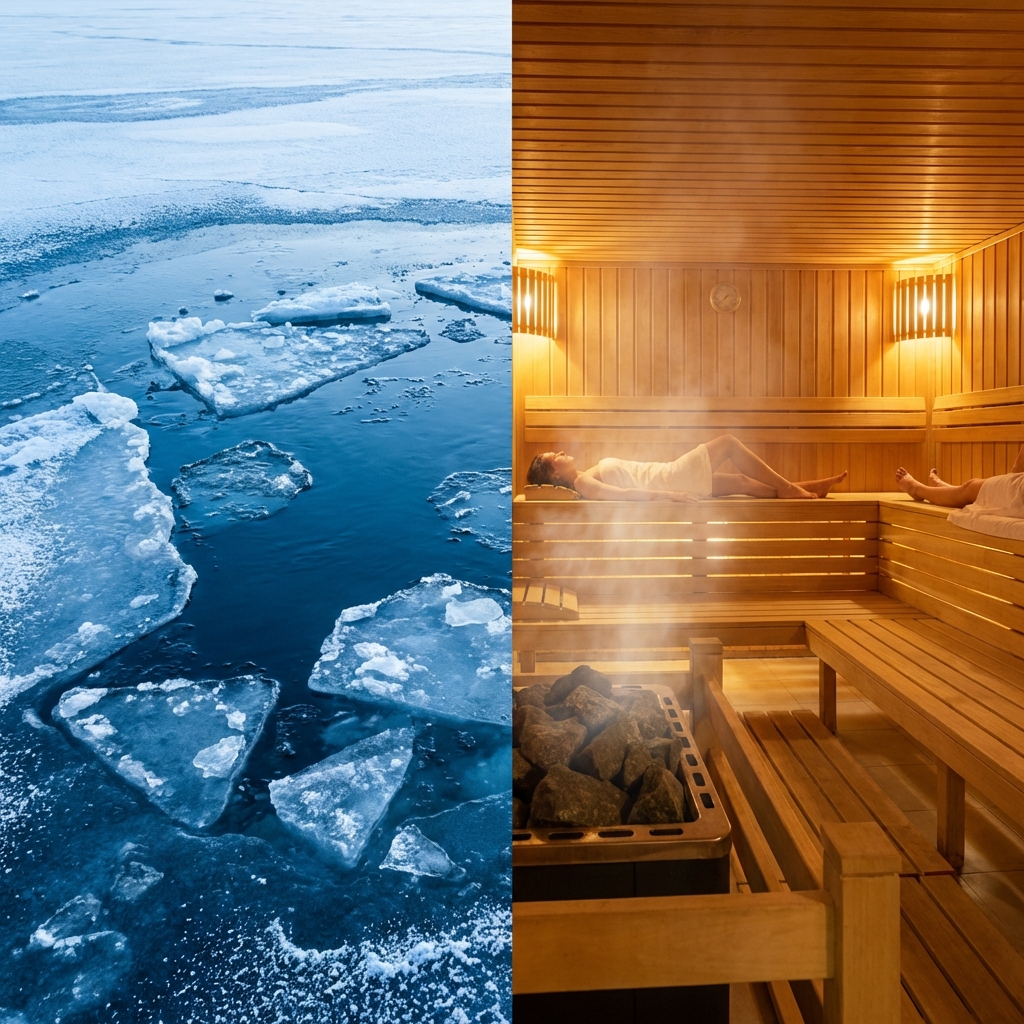
Here's where things get really interesting—combining hot and cold exposure. Contrast therapy benefits athletes and everyday wellness seekers alike by alternating between heat therapy and cold water immersion, a practice that is rapidly going mainstream.
The theory is that moving between temperature extremes creates a pumping action in your blood vessels, often referred to as vascular exercise. Heat causes vasodilation (blood vessels expand), while cold causes vasoconstriction (blood vessels contract). This alternation flushes metabolic waste, improves circulation, reduces muscle soreness, and significantly enhances recovery.
When figuring out how to perform contrast therapy, a typical contrast therapy protocol involves spending 15-20 minutes in a sauna, followed by 1-3 minutes in a cold plunge, repeated two to four times. Many people swear by this practice for recovery, energy, mental clarity, and overall wellbeing.
Does the science support it? Partially. Studies show that contrast therapy can reduce muscle soreness and improve perceived recovery after intense exercise. The cardiovascular benefits of alternating temperature stress may also compound the benefits of each practice individually. However, more research is needed to fully understand the optimal protocols and long-term effects.
What About the Risks?
Before you rush out to build a backyard sauna or order a chest freezer to convert into an ice bath, you need to understand the risks. Temperature extremes aren't for everyone.
Cold plunges can be dangerous for people with certain cardiovascular conditions. The sudden shock of cold water causes your heart rate and blood pressure to spike dramatically. For people with heart disease, uncontrolled hypertension, or certain other conditions, this could trigger a cardiac event. Even healthy people can experience dangerous reactions if they're not careful—staying in too long can lead to hypothermia.
Saunas are generally safer for most people, but they still carry risks. Dehydration is the most common issue—you're sweating profusely, losing significant fluids and electrolytes. People with low blood pressure might experience dizziness or fainting. Pregnant women should avoid saunas entirely, as sustained elevated core temperature can harm fetal development.
The key is starting slowly, listening to your body, and consulting with healthcare providers if you have any pre-existing conditions. This isn't an area where more is automatically better.
Beyond Physical Benefits: The Mental Game
One aspect of cold plunging that doesn't get enough attention is the psychological benefit. Voluntarily subjecting yourself to intense physical discomfort requires significant mental discipline. You have to breathe through the initial shock, calm your mind as your body screams at you to get out, and remain present despite intense sensations.
This practice builds mental resilience that extends beyond the ice bath. Many practitioners report that regular cold exposure improves their ability to handle stress in other areas of life. When you've learned to stay calm in 40-degree water, a stressful work deadline feels more manageable by comparison.
There's also something powerful about doing difficult things intentionally. In a world where we're constantly seeking comfort and convenience, choosing discomfort becomes a form of empowerment. You're proving to yourself that you can do hard things—and that confidence carries over.
Saunas offer their own mental benefits, though different in nature. The forced stillness of sitting in heat creates a meditative space. You can't bring your phone into a 180-degree sauna. You can't multitask. You just have to sit, breathe, and be present. For many people living in a state of constant distraction, this enforced presence becomes incredibly valuable.
The Social Dimension
Interestingly, both cold plunges and saunas are becoming social activities. Running clubs are incorporating group cold plunges after workouts. Wellness centers offer "rooftop IV therapy" where groups can sweat together. Friends meet at bathhouses and spas for contrast therapy sessions.
This social component might be one of the most important aspects of the trend. Shared challenge builds connection. Suffering together creates bonds. And in an increasingly isolated society where genuine face-to-face interaction is declining, any practice that brings people together physically has value beyond its direct health benefits.
DIY vs. Premium Experiences
You don't need a $10,000 Plunge or a designer sauna to experience these benefits. Some people are making cold plunges work with converted chest freezers or simply taking cold showers. Others are building DIY saunas or using community bathhouses.
That said, the premium options offer convenience and optimal experiences. Dedicated cold plunge tubs maintain consistent temperatures, include filtration systems, and are specifically designed for the purpose. High-end saunas offer precise temperature control, superior materials, and better insulation.
The question is whether the premium experience is worth the significant cost difference. For some people, absolutely—having it readily available at home dramatically increases consistency. For others, DIY solutions or gym memberships that include these amenities make more sense.
Practical Protocols That Actually Work
If you're interested in trying cold exposure or sauna therapy, here are some evidence-based protocols to consider:
For cold plunging: Start with just 30-60 seconds in cold water (50-59°F), gradually building up to 2-3 minutes as your body adapts. Most benefits seem to occur in the 2-5 minute range. Going longer doesn't necessarily provide additional benefits and increases risk. Frequency matters more than duration—several short sessions per week is better than one long session. Always enter slowly, control your breathing, and never push yourself to the point of uncontrollable shivering.
For saunas: Aim for 15-20 minute sessions at 160-180°F, which is the range most studied in research. You can build up to longer sessions (up to 30 minutes) as you adapt. Frequency is important—studies showing the strongest health benefits involved 4-7 sauna sessions per week. Always hydrate before and after. Leave immediately if you feel dizzy, nauseous, or uncomfortable.
For contrast therapy: A common protocol is 15-20 minutes in the sauna, followed by 2-3 minutes in cold water, repeated 3-4 times, ending with cold. Always listen to your body and adjust based on how you feel.
Who Should Skip These Practices?
These practices aren't for everyone. You should avoid or get medical clearance first if you have:
- Cardiovascular disease or uncontrolled hypertension
- Pregnancy (especially saunas)
- Certain neurological conditions
- Recent surgery or open wounds
- History of cold urticaria (allergic reaction to cold)
- Epilepsy or seizure disorders
Even if you're healthy, start conservatively. The goal isn't to suffer—it's to provide your body with beneficial stress in controlled doses.
The Verdict: Hype or Helpful?
So, is this trend legit? The answer is mostly yes, with caveats. Both cold exposure and sauna use have genuine research backing various health benefits. They're not miracle cures, and they won't compensate for poor diet, lack of exercise, or inadequate sleep. But as additions to a healthy lifestyle, they offer legitimate benefits for many people.
The key is approaching them intelligently—understanding both benefits and risks, starting slowly, listening to your body, and not buying into exaggerated claims. You don't need to spend thousands of dollars or subject yourself to extreme protocols to benefit.
Think of temperature therapy as one tool in your wellness toolkit. It's not the foundation—that's still diet, exercise, sleep, stress management, and relationships. But for people who've optimized those fundamentals and are looking for additional practices that support health and resilience, cold plunges and saunas are worth considering.
Just maybe start with shorter, warmer, less intense versions before you commit to becoming a daily ice bath warrior. Your body—and your nervous system—will thank you for the gradual approach.
Frequently Asked Questions
Is it better to sauna or cold plunge first? For a standard contrast therapy protocol, it's generally best to start with the heat of the sauna to get your body warm, sweating, and relaxed. You then follow it up immediately with the cold plunge. Always aim to end your session on cold if you want to maximize the alertness and nervous system reset, allowing your body to naturally warm itself back up.
How long should you cold plunge after a sauna? A highly effective protocol involves spending 15 to 20 minutes in a sauna, followed immediately by 1 to 3 minutes in a cold plunge. You can repeat this cycle two to four times. Consistency and listening to your body matter far more than pushing for extreme durations.
Is contrast therapy good for muscle recovery? Yes. Alternating between heat (vasodilation) and cold (vasoconstriction) creates a "vascular pump" effect. This vascular exercise helps flush metabolic waste, like lactic acid, from your muscles while bringing in nutrient-rich blood, which can significantly reduce delayed onset muscle soreness (DOMS).
Who should avoid contrast therapy? While contrast therapy benefits many healthy individuals, it places a heavy demand on your cardiovascular system. If you have heart conditions, high blood pressure, arrhythmias, or if you are pregnant, you should skip extreme temperature therapy and consult a healthcare provider for safer recovery alternatives.
Medical Disclaimer: This article is for informational purposes only and does not constitute medical advice. Always consult a qualified healthcare provider.
Frequently Asked Questions
Is it better to sauna or cold plunge first?
For a standard contrast therapy protocol, it's generally best to start with the heat of the sauna to get your body warm, sweating, and relaxed. You then follow it up immediately with the cold plunge. Always aim to end your session on cold if you want to maximize the alertness and nervous system reset, allowing your body to naturally warm itself back up.
How long should you cold plunge after a sauna?
A highly effective protocol involves spending 15 to 20 minutes in a sauna, followed immediately by 1 to 3 minutes in a cold plunge. You can repeat this cycle two to four times. Consistency and listening to your body matter far more than pushing for extreme durations.
Is contrast therapy good for muscle recovery?
Yes. Alternating between heat (vasodilation) and cold (vasoconstriction) creates a "vascular pump" effect. This vascular exercise helps flush metabolic waste, like lactic acid, from your muscles while bringing in nutrient-rich blood, which can significantly reduce delayed onset muscle soreness (DOMS).
Who should avoid contrast therapy?
While contrast therapy benefits many healthy individuals, it places a heavy demand on your cardiovascular system. If you have heart conditions, high blood pressure, arrhythmias, or if you are pregnant, you should skip extreme temperature therapy and consult a healthcare provider for safer recovery alternatives.