Biohacking for Everyday People: Smart Ways to Improve Health Without Extremes
Health Focus Team
Published
Looking for an everyday biohacking guide? Biohacking doesn't have to be expensive. Discover how to start biohacking with simple, science-backed habits for sleep, energy, and brain performance.
Written by: Health Focus Research Team Medically Reviewed by: Dr. Sarah Chen, MD, PhD – Board-Certified Neurologist & Functional Medicine Specialist Last updated: February 28, 2026 | Reading time: 9 minutes
Biohacking is often portrayed as the domain of Silicon Valley executives who sleep in hyperbaric chambers, inject themselves with young blood, and spend $50,000 a year on health optimization. This distorted image has kept millions of ordinary people from accessing the genuinely powerful and completely free (or dirt-cheap) biology-based tools that can transform their health. If you are looking for an everyday biohacking guide that skips the extreme science fiction, you are in the right place.
The reality? Biohacking on a budget is completely possible. In fact, the five most effective biohacks in the world cost less than $10 a month combined — or nothing at all. This article serves as the ultimate resource on biohacking for beginners, explaining the science behind these simple biohacks for everyday life and giving you a step-by-step protocol to help you figure out how to start biohacking today.
Expert Insight: "The word 'biohacking' scares people, but what it really means is understanding how your body works and using that knowledge strategically," explains functional neurologist Dr. Sarah Chen. "From a neuroscience perspective, the biggest wins come from three things: controlling your light environment, stabilizing your blood sugar, and protecting your sleep architecture. These three factors regulate every major system in the human body, and they cost almost nothing to optimize."
What is Biohacking and Is It Safe?
Biohacking is the practice of using data, behavioral changes, and environmental adjustments to optimize how your body and mind function. At its core, it is working with your biology — not against it. But is biohacking safe? The foundational habits we outline below—like sleep hygiene, natural light exposure, and whole-food nutrition—are incredibly safe and firmly backed by medical science. It's only when you wander into unverified supplements or extreme experimental procedures that the risks start to outweigh the rewards.
There are three levels of biohacking:
- Lifestyle biohacking: Sleep, light, food timing, cold/heat exposure, breathing. This is where 90% of your results live.
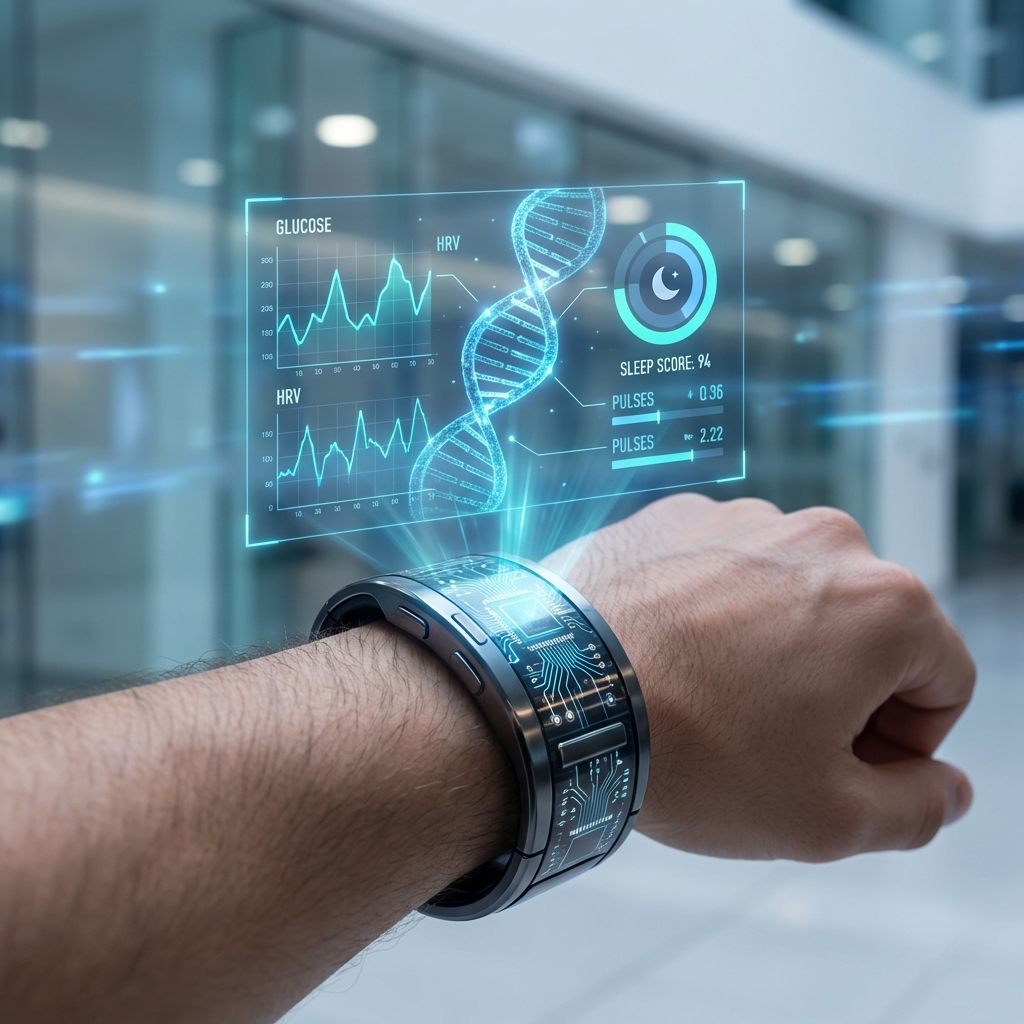
- Technology-assisted biohacking: Wearables, continuous glucose monitors (CGMs), HRV tracking. Useful for quantifying your lifestyle choices.
- Advanced biohacking: Peptides, exogenous hormones, genetic testing. Generally requires a physician's supervision.
This guide focuses on Levels 1 and 2, which deliver the vast majority of benefits to everyday people. According to a 2024 analysis by the American College of Lifestyle Medicine, the consistent application of foundational lifestyle behaviors (sleep, exercise, nutrition, stress management) accounts for up to 70% of all preventable chronic disease.
The 5 Foundational Biohacks That Actually Work
1. The Circadian Light Protocol (Free, Starts Immediately)
Your body is run by a master biological clock located in your brain's suprachiasmatic nucleus (SCN). This clock governs when cortisol rises, when melatonin releases, when your gut produces digestive enzymes, and when testosterone peaks. It is synchronized primarily through light.
The protocol:
- Morning (within 30–60 minutes of waking): Get 10–20 minutes of natural outdoor light in your eyes — not through a window, which filters out the specific UV wavelengths your SCN needs. This is the single most powerful circadian reset tool available. A 2023 Stanford University study confirmed that even on overcast days, outdoor light is 10–50x brighter than typical indoor lighting.
- Evening (2 hours before bed): Dim all lights in your home to below 10 lux (the equivalent of candlelight). Avoid LED overhead lights. A 2021 study in Current Biology found that just one week of camping (no artificial light) fully reset participants' circadian rhythms, eliminating the "social jetlag" that plagues 80% of Americans.
Why this matters for Americans specifically: The CDC reports that 1 in 3 American adults do not get enough sleep. Circadian disruption from artificial light is cited as a leading contributing factor.
2. The Blood Sugar Stability Protocol
You do not need a continuous glucose monitor to apply this hack — it helps, but the principles work without one. Blood sugar spikes and crashes are now recognized as a driver of brain fog, energy crashes, anxiety, hormonal disruption, and accelerated aging.
The three rules:
- Eat protein or fat before any carbohydrates. A 2023 study in Diabetes Care showed that eating protein first slowed the rise of blood glucose by 37% after the same meal.
- Walk for 10 minutes after your largest meal. Post-meal walking is one of the most powerful glucose-disposal tools available. Muscles act as a "glucose sponge" when they contract.
- Eat your first meal at least 60–90 minutes after waking. Allow cortisol (your natural morning energy hormone) to peak and begin declining before triggering an insulin response with food.
3. The Sleep Architecture Optimization Protocol
Sleep is not just "rest." During deep sleep (Stage 3 NREM), your brain clears metabolic waste via the glymphatic system — a process that is critically impaired when you sleep fewer than 7 hours. Insufficient clearance of metabolic waste (specifically beta-amyloid plaques) is now strongly linked to long-term cognitive decline.
The protocol:
- Keep your bedroom below 67°F (19.4°C). Core body temperature must drop 1–2°F for sleep to initiate. A cool room is not a preference — it's a physiological requirement.
- Create a "sleep pressure" wall: No screens for 60–90 minutes before bed. Melatonin production is suppressed by blue light from devices. Period. No exceptions.
- Go to bed and wake up at the same time every day — including weekends. Even a two-hour shift on weekends ("social jetlag") reduces insulin sensitivity by approximately 20%, equivalent to the effect of cutting sleep in half for two days.
4. Cold and Heat Exposure (The $0 Protocol)
Cold exposure (a cold shower at the end of your regular shower, 30–90 seconds of cold water) triggers a massive release of norepinephrine — a catecholamine that, at the levels induced by cold shock, has been shown to improve focus, mood, and motivation for 2–4 hours after exposure. A 2023 meta-analysis in PLOS ONE found cold water immersion produced measurable antidepressant effects.
Heat exposure (using a gym sauna, hot bath, or hot shower) activates Heat Shock Proteins (HSPs), which repair misfolded proteins inside your cells — a key mechanism in slowing cellular aging. Multiple large cohort studies from Finland, where sauna use is cultural, show 40% lower rates of cardiovascular mortality in people who use sauna 4–7 times per week.
Important: Both cold and heat exposure should be approached gradually. Consult your physician if you have cardiovascular conditions.
5. The HRV Tracking Hack (Technology-Assisted)
Heart Rate Variability (HRV) is the beat-to-beat variation in your heart rhythm. It sounds counterintuitive, but more variability is better — it means your autonomic nervous system is balanced and adaptable. Low HRV is a sensitive marker of chronic stress, over-training, poor sleep, and impending illness — often 24–48 hours before you feel symptoms.
You can track HRV free with a chest strap (Polar H10, ~$65 one-time purchase) and apps like Elite HRV. The goal is not to achieve a specific number, but to use your personal baseline as a daily readiness score.
- HRV above your baseline: Train hard, challenge yourself.
- HRV below your baseline: Prioritize recovery, walk instead of sprinting, sleep earlier.
Wearable Technology: What's Worth It in 2026
The US wearable health technology market is now worth over $50 billion, but most of the devices are measuring the same three things with different aesthetics. Here is what is worth the money and what isn't:
| Device | Most Useful For | Worth It? |
|---|---|---|
| Oura Ring / Whoop | Sleep architecture, HRV recovery scoring | ✅ Yes — for the data serious users want |
| CGM (NovaSensor, Levels) | Blood sugar education and pattern recognition | ✅ For a 2-week experiment to identify your glucose triggers |
| Apple Watch / Garmin | Step count, heart rate, basic HRV | ✅ Good general-purpose tracker |
| Smart Scale (Withings) | Body composition trends over time (not daily) | ✅ If used weekly, not daily |
| AI Overlay Apps (January AI) | Predictive blood glucose without CGM | ⚠️ Emerging tech, use with skepticism |
The Biggest Biohacking Mistake Americans Make
It's not spending too little — it's implementation complexity. People try to change 8 things simultaneously (new sleep schedule, cold plunges, intermittent fasting, red light therapy, new supplements, CGM, HRV tracking, and a new training program) and burn out by week two.
The most reliable biohacking protocol is embarrassingly boring:
Week 1: Morning light only. Week 2: Morning light + protein-first meals. Week 3: Add the cold shower finish. Week 4: Add the sleep temperature protocol.
Each individual change compounds. Four weeks of stacking fundamentals will outperform three months of chaotic experimentation every single time.
Practical Action Plan: Your First 7-Day Biohacking Protocol
Day 1–2: Step outside within 30 minutes of waking, no sunglasses, for 15 minutes. Take note of your energy level at 2 PM.
Day 3–4: Add 10-minute walk after dinner. Notice sleep quality.
Day 5–6: Drop your bedroom temperature by 3°F tonight. Track sleep depth if you have a wearable.
Day 7: End your morning shower with 30 seconds of cold water. Rate your mood and focus 2 hours later.
After 7 days, you will have implemented 4 of the most evidence-backed biohacks in the literature — at zero ongoing cost.
Frequently Asked Questions
What is the difference between biohacking and a healthy lifestyle?
While a general healthy lifestyle follows broad medical recommendations, biohacking takes a more systematic, data-driven approach. It's about treating your body as an experiment where you actively tweak specific habits and track your personal responses to optimize performance, energy, and longevity.
Do I need expensive gadgets to biohack?
Not at all. While plenty of enthusiasts love wearable technology and continuous glucose monitors, biohacking on a budget is incredibly effective. The highest-impact habits are entirely free, including establishing a rock-solid sleep schedule, getting morning sunlight, and practicing intermittent fasting or time-restricted eating.
How long does it take to see results?
It depends on what you are measuring. You can feel the energy-boosting effects of proper hydration and morning sunlight within just a few days. However, the long-term benefits of biohacking—like slowing cellular aging, improving cardiovascular health, and protecting cognitive function—compound quietly over months and years of consistent practice.
References & Clinical Sources:
- Short-wavelength light and circadian misalignment – Current Biology (2021)
- Benefits of a Cold Shower on Mood – PLOS ONE Meta-Analysis (2023)
- Sauna bathing and cardiovascular mortality – JAMA Internal Medicine (Finnish Sauna Study)
- Postprandial glycaemic reduction by food order – Diabetes Care (2023)
- CDC Sleep and Sleep Disorders Data – Centers for Disease Control and Prevention
Disclaimer: This article is for informational purposes only. Cold and heat exposure can be contraindicated for individuals with certain cardiovascular conditions. Always consult your physician before making significant changes to your health routine.
About the Reviewer: Dr. Sarah Chen, MD, PhD is a board-certified neurologist and functional medicine specialist. She focuses on the intersection of lifestyle medicine and neuroscience, helping patients optimize cognitive performance, sleep architecture, and autonomic nervous system health through evidence-based behavioral interventions.
Medical Disclaimer: This article is for informational purposes only and does not constitute medical advice. Always consult a qualified healthcare provider.