Are Ultra-Processed Foods Destroying American Health? What the Latest Research Shows
Health Focus Team
Published
Ultra-processed foods make up 57% of US calories. Learn to identify them, understand the health risks, and protect your metabolic health with simple swaps.
Written by: Health Focus Research Team Medically Reviewed by: Dr. Priya Sharma, MBBS, MD – Board-Certified Endocrinologist & Metabolic Medicine Specialist Last updated: February 28, 2026 | Reading time: 10 minutes
In the United States, ultra-processed foods — factory-manufactured products engineered for hyper-palatability, extended shelf life, and maximum profitability — now account for approximately 57% of all calories consumed by American adults and 67% of calories consumed by American children, according to a landmark 2022 analysis in the American Journal of Clinical Nutrition. When exploring examples of ultra-processed foods in the American diet, it becomes clear they have dominated our grocery store aisles and pantries.
This is not a coincidence. It is the result of 70 years of deliberate food industry engineering, aggressive lobbying against nutrition regulation, and a food environment uniquely hostile to human metabolic health. And the consequences are now visible in the research with alarming clarity.
Expert Insight: "I see the consequences of ultra-processed food diets in my clinic every single week," says Dr. Priya Sharma. "When I review my patients' dietary patterns alongside their blood work — fasting insulin that's been creeping up for a decade, triglycerides that won't come down despite statin therapy, HbA1c trends heading toward prediabetes — I can almost always trace the root cause back to a diet dominated by convenience foods. The research is no longer ambiguous. Ultra-processed foods are not just empty calories. They are biologically active in ways we are only beginning to understand."
What Actually Counts as "Ultra-Processed"?
For those asking what is the difference between processed and ultra-processed foods, the most widely accepted classification system is NOVA, developed by researchers at São Paulo University and now used by the WHO, the Pan American Health Organization, and public health agencies worldwide. To understand how to identify ultra-processed foods, NOVA divides foods into four main groups:
| NOVA Group | Definition | Examples |
|---|---|---|
| Group 1 — Unprocessed/Minimally Processed | Food as nature provides, with no industrial addition | Fruits, vegetables, eggs, raw meat, nuts, plain yogurt |
| Group 2 — Processed Culinary Ingredients | Simple extracts used in cooking | Olive oil, butter, flour, salt, sugar |
| Group 3 — Processed Foods | Simple combinations with preservation intent | Canned tomatoes, salted nuts, cured meats, artisan cheeses |
| Group 4 — Ultra-Processed | Industrial formulations with 5+ industrial ingredients; engineered for palatability | Chips, soft drinks, hot dogs, packaged cookies, most breakfast cereals, chicken nuggets, "diet" products, flavored yogurts, instant noodles, fast food |
The distinguishing characteristic of Group 4 foods is the presence of ingredients that are not found in any home kitchen: emulsifiers, artificial flavors, colorants, flavor enhancers (MSG variants), modified starches, hydrogenated oils, high-fructose corn syrup, invert sugar syrup, and a long list of additives that serve no nutritional purpose — only industrial ones.
The Research: What Are the Risks of Consuming Too Many Ultra-Processed Foods?
When examining the side effects of eating highly processed food, the evidence is overwhelming across multiple biological systems.
Cardiovascular Disease
The most comprehensive study to date on ultra-processed food and cardiovascular health is the PROSPECTIVE URBAN RURAL EPIDEMIOLOGY (PURE) study — a global cohort of 137,130 individuals across 18 countries, published in JAMA Internal Medicine (2021). Each 10% increment in ultra-processed food consumption was associated with a 12% higher risk of developing cardiovascular disease.
A separate 2022 Journal of the American College of Cardiology analysis of 104,909 French adults found that every 10% increase in ultra-processed food consumption was associated with a significant increase in the risk of cardiovascular, coronary heart disease, and cerebrovascular conditions.
Cancer
A landmark 2023 meta-analysis published in EClinicalMedicine (The Lancet) synthesized evidence from 10 prospective cohort studies totaling 1.1 million participants. The results: each 10% increase in ultra-processed food consumption was associated with a 2% higher overall cancer risk, with stronger associations for breast cancer (+16%), ovarian cancer (+30%), and colorectal cancer.
The mechanisms proposed include: chronic inflammatory signaling from emulsifiers (specifically polysorbate 80 and carboxymethylcellulose, shown in mouse models to disrupt the intestinal mucosal barrier), endocrine disruption from BPA/phthalates leaching from food packaging, and persistent neurochemical reward loops that short-circuit appetite regulation.
Mental Health: Depression and Anxiety
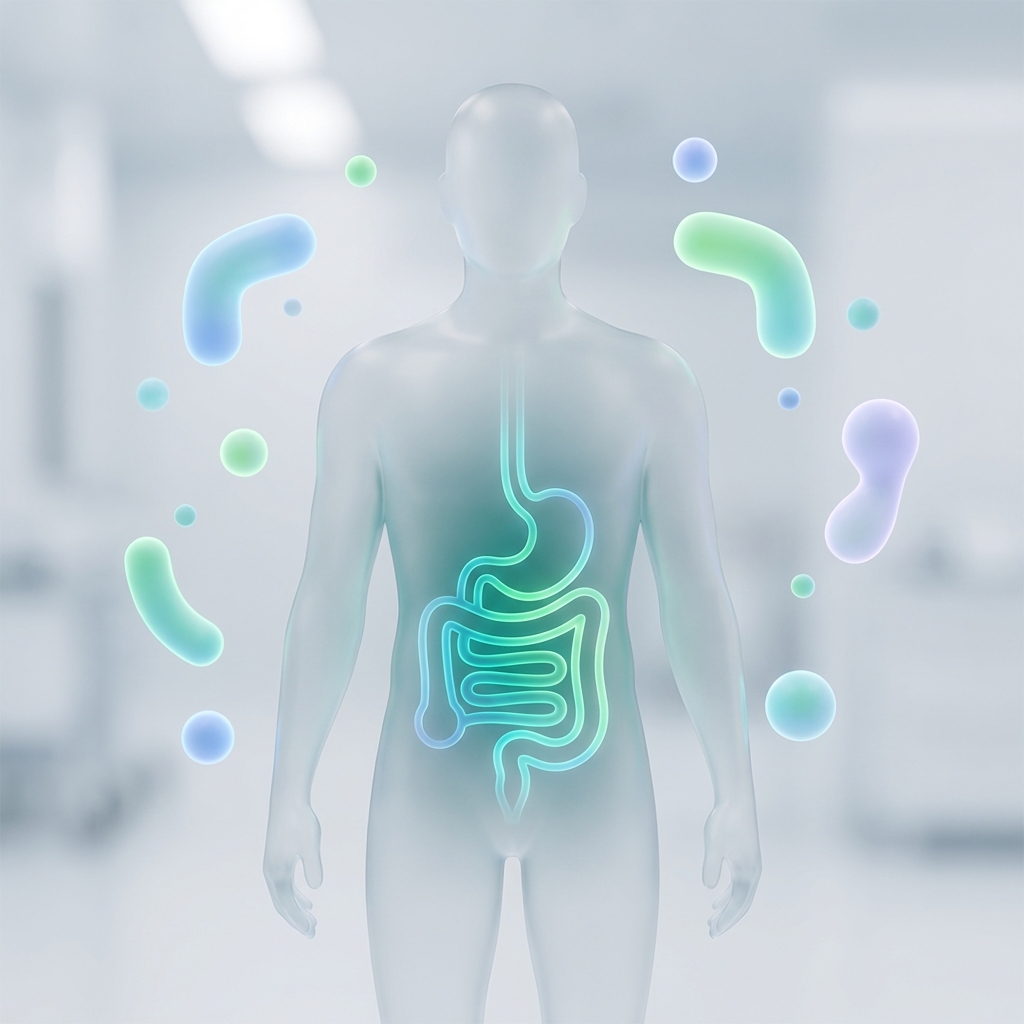
The gut-brain connection means that what damages the microbiome damages the mind. Ultra-processed foods are uniquely harmful to gut microbial diversity — they are high in emulsifiers that dissolve the mucus layer protecting the gut epithelium and low in fiber that feeds beneficial bacterial species.
A 2022 systematic review in Nutrients found that higher ultra-processed food consumption was significantly associated with increased risk of depression, anxiety, and psychological distress, even after adjusting for overall dietary quality, sleep, exercise, and socioeconomic factors.
A 2023 NIH-funded study of 10,359 Americans found that the number of ultra-processed food servings consumed daily was dose-dependently associated with depressive symptoms — a key finding because it suggests a causal relationship, not just correlation.
All-Cause Mortality
Perhaps the most alarming finding comes from a 2023 study in JAMA Internal Medicine: A 10-year observational study of 22,895 Italian adults found that those with the highest ultra-processed food consumption had a 26% higher risk of dying from any cause during the follow-up period, compared to those with the lowest consumption. The associations were strongest for mortality from cardiovascular causes (+58%), and motor neuron disease and Parkinson's disease (+120%).
Why Ultra-Processed Foods Are Uniquely Harmful — Not Just "Bad"
The key insight research has uncovered over the last decade is that ultra-processed foods are not simply unhealthy foods — they are biologically active substances that interact with human physiology in ways that whole foods do not.
1. They actively disrupt gut barrier integrity. Specific emulsifiers — carboxymethylcellulose (CMC) and polysorbate 80, found in hundreds of processed foods — have been shown in controlled studies to erode the colonic mucus layer, promoting bacterial translocation (bacteria crossing from the gut lumen into the bloodstream), triggering systemic inflammation.
2. They bypass normal satiety signaling. Ultra-processed foods are engineered to hit multiple reward signals simultaneously (fat + salt + sweet + crunch) at a pace that overrides the 15–20 minute satiety delay. A 2019 NIH clinical trial — the first randomized controlled trial of ultra-processed food consumption — found that participants eating ultra-processed foods consumed 508 more calories per day than when eating the same macronutrient profile in minimally processed form, even when their subjective hunger ratings were the same.
3. They drive addictive eating patterns. Neuroimaging research from the University of Michigan has shown that certain ultra-processed foods (pizza, ice cream, chips) activate dopamine reward circuits with an intensity comparable to addictive substances, and with a faster onset than whole foods, conditioning the brain to seek these specific combinations.
How Americans Can Reduce Ultra-Processed Food Consumption
This is not about achieving dietary perfection. It is about a realistic harm-reduction approach across an American food environment that makes ultra-processed foods the cheapest, fastest, and most aggressively marketed option available.
| Strategy | Implementation | Difficulty |
|---|---|---|
| The "5 ingredient rule" | If a packaged product has more than 5 ingredients, or contains an ingredient you can't pronounce/wouldn't have at home, put it back | Easy |
| Swap your snacks | Replace packaged snack foods (chips, crackers, cookies) with whole food alternatives (nuts, fruit, yogurt, hard-boiled eggs) | Easy–Moderate |
| Cook once, eat twice | Batch cooking on Sunday prevents weekday ultra-processed default meals | Moderate |
| Drink water as default | Eliminate all sugary drinks and artificially sweetened drinks from daily routine. The average American gets 145 calories/day from beverages. | Hard (habitual) |
| Grocery store navigation | Shop the store perimeter (produce, meat, dairy) first; only enter aisles for specific necessities | Easy |
| Read ingredients, not labels | Front-of-package claims ("healthy," "low-fat," "natural") are marketing. The ingredient list is truth. | Moderate |
Practical Action Plan: The 14-Day Ultra-Processed Reduction Challenge
Week 1 Goal: Identify, don't eliminate. Before changing anything, spend one week simply cataloging how many ultra-processed foods you eat daily. Use the NOVA Group 4 criteria. Most people are genuinely shocked by the result.
Week 2 Goal: Replace one category. Choose the category of ultra-processed foods you eat most frequently (e.g., breakfast foods, snacks, or lunch) and replace all items in that category with Group 1–3 alternatives for 7 days. Notice your energy, hunger patterns, and mood.
The longer game: Each subsequent month, address one more category. Research shows that reducing ultra-processed intake by just 50% dramatically improves metabolic markers within 2–4 weeks.
Frequently Asked Questions
What is the difference between processed and ultra-processed foods?
Processed foods typically have simple ingredients added for preservation or flavor, such as canned beans with salt or cheese. Ultra-processed foods are industrial formulations containing five or more ingredients, often including additives like emulsifiers, artificial flavors, and stabilizers not found in a home kitchen.
Are all ultra-processed foods inherently unhealthy?
While public health experts generally advise limiting them, some items that technically fall under the ultra-processed label (like certain mass-produced whole-grain breads or fortified plant milks) can still offer nutritional value. However, the vast majority—like sodas, packaged pastries, and instant noodles—are engineered in ways that can negatively impact metabolic health when consumed regularly.
How can I identify ultra-processed foods on grocery store labels?
The easiest way is to read the ingredient list. If you see high-fructose corn syrup, hydrogenated oils, artificial colors, or long, complex chemical names you wouldn't keep in your own pantry (such as polysorbate 80 or carboxymethylcellulose), it is likely an ultra-processed food.
References & Clinical Sources:
- Ultra-processed foods and mortality in Italy – JAMA Internal Medicine (2023)
- NIH: Ultra-processed diet and calorie intake — RCT – Cell Metabolism (2019, Hall et al.)
- Ultra-processed foods and cancer risk in 1.1 million – EClinicalMedicine / The Lancet (2023)
- NOVA Food Classification System – FAO / PAHO
- Ultra-processed foods and depression – Nutrients (2022 Meta-Analysis)
Disclaimer: This article is for educational purposes and does not constitute dietary advice. If you have specific nutritional needs or health conditions, please consult a registered dietitian or your physician before making significant dietary changes.
About the Reviewer: Dr. Priya Sharma, MBBS, MD is a board-certified endocrinologist who incorporates nutritional medicine and patient-centered dietary counseling into the management of metabolic syndrome, insulin resistance, and obesity. She regularly reviews and interprets emerging food science literature for clinical application in her practice.
Medical Disclaimer: This article is for informational purposes only and does not constitute medical advice. Always consult a qualified healthcare provider.
Frequently Asked Questions
What is the difference between processed and ultra-processed foods?
Processed foods typically have simple ingredients added for preservation or flavor, such as canned beans with salt or cheese. Ultra-processed foods are industrial formulations containing five or more ingredients, often including additives like emulsifiers, artificial flavors, and stabilizers not found in a home kitchen.
Are all ultra-processed foods inherently unhealthy?
While public health experts generally advise limiting them, some items that technically fall under the ultra-processed label (like certain mass-produced whole-grain breads or fortified plant milks) can still offer nutritional value. However, the vast majority—like sodas, packaged pastries, and instant noodles—are engineered in ways that can negatively impact metabolic health when consumed regularly.
How can I identify ultra-processed foods on grocery store labels?
The easiest way is to read the ingredient list. If you see high-fructose corn syrup, hydrogenated oils, artificial colors, or long, complex chemical names you wouldn't keep in your own pantry (such as polysorbate 80 or carboxymethylcellulose), it is likely an ultra-processed food.