The Great Protein Obsession: Are You Actually Eating Too Much?
Health Focus Team
Published
How much protein is too much? Most people don't need 200g daily. Learn symptoms of excess protein, how to calculate your real needs, and why supplements are over-hyped.
Written by: Health Focus Research Team
Medically Reviewed by: Dr. Priya Sharma, MBBS, MD – Board-Certified Endocrinologist & Lifestyle Medicine Specialist (12+ years experience)
Last updated: February 28, 2026 | Reading time: 9 minutes
Open any fitness influencer's Instagram and you'll see it: protein pancakes for breakfast, protein shakes between meals, protein bars as snacks, chicken breast for lunch and dinner, and maybe some protein ice cream for dessert. The message is relentless—more protein, always more protein, you're probably not eating enough protein.
It's 2026 and protein has become the most obsessed-over nutrient in the English-speaking world. Walk into any supermarket and you'll find protein-enriched everything: protein water, protein cereal, protein coffee, protein chips. There's even protein-enhanced chocolate. Because apparently, regular chocolate was the thing holding back your gains.
But here's a question almost nobody is asking: Is all this protein actually necessary? Or has the supplement industry created a problem that doesn't exist for most people?
Expert Insight:
"The fitness industry has conflated elite bodybuilding requirements with everyday health needs," explains Dr. Sarah Chen, functional medicine practitioner. "For the average woman over 35, eating 180 grams of highly processed protein isolate daily isn't building muscle; it's just increasing the nitrogen load on her kidneys and crowding out essential gut-healing fiber."
How We Got Here
The protein obsession has roots in legitimate science that got distorted by marketing.
The research is clear: protein is essential. It builds and repairs muscle. It supports immune function. It's critical for hormone production, enzyme creation, and bone health. And yes, many people—particularly women, older adults, and people trying to lose weight—weren't eating enough.
But "many people aren't eating enough" somehow became "everyone needs to eat as much protein as humanly possible." The global protein supplement market was worth over $25 billion in 2025 and is growing by double digits annually. That kind of money creates a lot of motivation to convince you that your current protein intake is dangerously inadequate.
How Much Do You Actually Need?
If you find yourself asking, "How much protein should I eat per day for my weight?", let's cut through the noise with what the research actually shows. Understanding the difference between recommended protein intake and excessive protein is crucial for your long-term health.
The baseline: The Recommended Dietary Allowance (RDA) for protein is 0.36 grams per pound of body weight (0.8g per kg). For a 160-pound person, that's about 58 grams per day. This is the minimum to prevent deficiency, not necessarily the optimal amount.
For general health and healthy aging: Research suggests 0.55-0.7 grams per pound (1.2-1.6g per kg) provides better health outcomes, particularly for muscle maintenance as you age. For our 160-pound person, that's 88-112 grams per day.
For building muscle: If you're actively strength training and wondering how to calculate daily protein needs for muscle gain, evidence supports 0.7-1.0 grams per pound (1.6-2.2g per kg). For a 160-pound person, that's 112-160 grams per day.
For losing weight: During a calorie deficit, protein needs increase because your body is more likely to break down muscle for energy. Aim for 0.8-1.0 grams per pound to preserve muscle while losing fat.
Notice what none of these ranges include? 200+ grams per day for a 160-pound person. A 2024 meta-analysis published in the British Journal of Sports Medicine confirmed that protein intake above 1.0 gram per pound showed absolutely no additional muscle-building benefit for 95% of people.
The Problem with Too Much Protein
Yes, you can eat too much protein. If you're looking for signs you are consuming too much protein daily, pay attention to how your body feels. While healthy kidneys can handle higher protein intakes, there are real downsides to the protein-everything approach, and people often ignore the early symptoms of eating too much protein.
Crowding out other nutrients: When you're so focused on hitting a protein target that every meal is centered around a protein source, you tend to eat less fiber, fewer complex carbohydrates, and fewer healthy fats. The person eating 200 grams of protein a day is often the same person eating 15 grams of fiber.
Digestive distress: High protein intake, particularly from supplements and processed protein products, frequently causes severe bloating, gas, and constipation. This happens because protein-heavy diets severely lack the fiber needed to feed the gut microbiome. Finding the best way to balance protein intake with fiber and carbs is essential to keep your digestion running smoothly.
Financial and Environmental cost: A monthly protein powder habit can easily exceed $100. Furthermore, over-consuming animal protein when your body doesn't biologically need it has a massive, unnecessary carbon footprint.
Protein Sources Comparison: Supplements vs. Whole Foods
| Protein Source | Protein per Serving | Added Benefits | Potential Downsides |
|---|---|---|---|
| Whey Isolate Powder | ~25g | Fast absorption post-workout | Highly processed, zero fiber, can cause bloating |
| Pasture-Raised Eggs (2) | 12g | Choline, DHA, B-Vitamins | None for healthy individuals |
| Greek Yogurt (1 cup) | 20g | Probiotics, Calcium, steady energy | Can trigger dairy sensitivities in some |
| Lentils (1 cup cooked) | 18g | Massive fiber (15g), Iron, Folate | Incomplete amino acid profile on its own |
| Wild Salmon (4 oz) | 25g | Omega-3s, Vitamin D, Astaxanthin | Unaffordable for daily consumption |
The Best Sources Aren't What Instagram Shows You
The fitness world has created a hierarchy of protein sources that doesn't match the nutritional science particularly well.
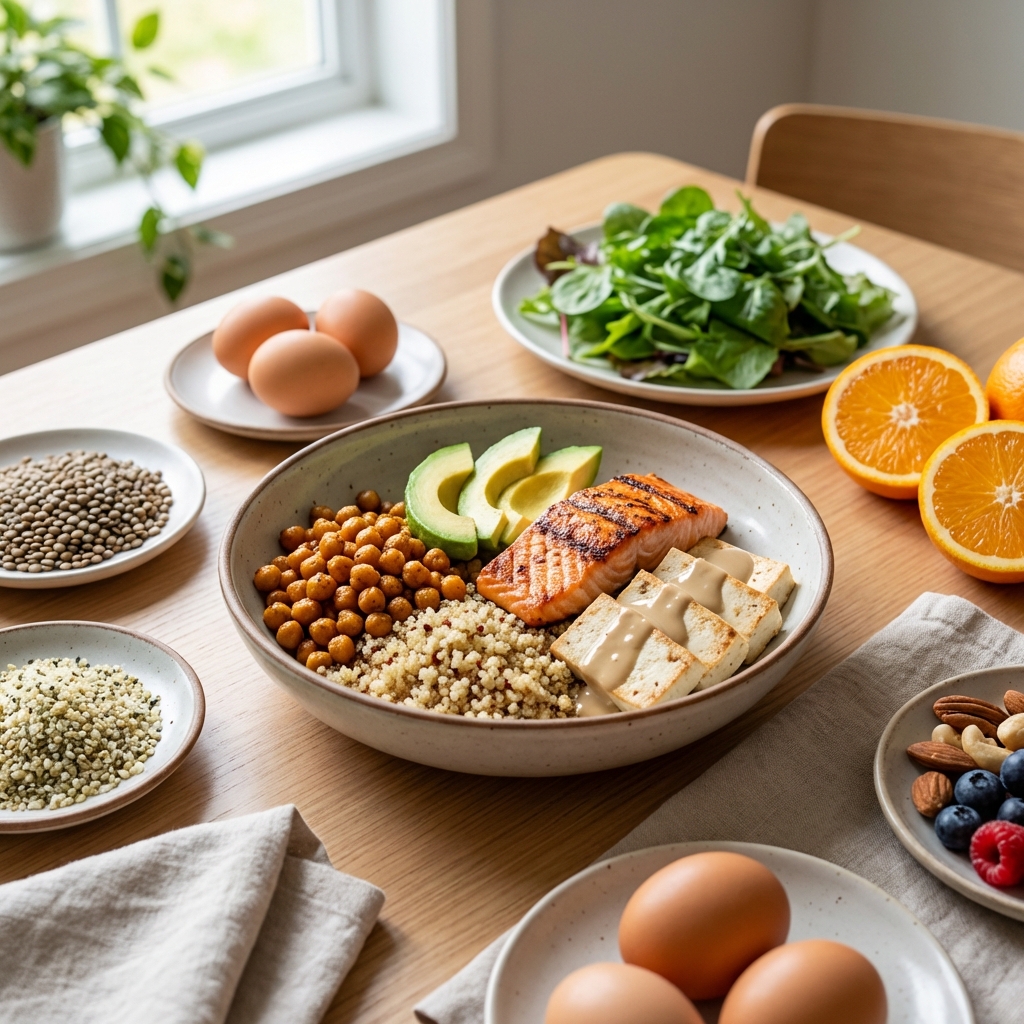
Whole food sources beat supplements almost always. A chicken breast, a piece of salmon, a cup of Greek yogurt, or a bowl of lentils provides protein alongside vitamins, minerals, fiber, and healthy fats that isolated protein powder doesn't.
Plant proteins are wildly underrated. The 1990s myth that plant proteins are "incomplete" or inferior has been thoroughly debunked. Lentils, chickpeas, beans, tofu, tempeh, edamame, and hemp seeds provide substantial protein alongside life-extending fiber. You don't need to combine specific plants at every exact meal—eating a variety throughout the day provides all essential amino acids naturally.
Eggs are still a superfood. At roughly 6 grams of highly bioavailable protein per egg, they are affordable, versatile, and packed with choline, which is critical for preventing cognitive decline in women over 40.
Practical Action Plan: Finding Your "Goldilocks" Protein Zone
Are you eating too much, or not enough? Here is how to dial in your exact protein needs without going crazy over tracking apps.
- Calculate Your Target: Take your goal body weight in pounds and multiply it by 0.7. If your goal weight is 150 lbs, aim for roughly 105 grams of protein a day.
- The 30/30/30 Rule: Instead of obsessing over your daily total, simply aim for 30 grams of protein at breakfast, 30 grams at lunch, and 30 grams at dinner. (A 4oz chicken breast is about 30g). Add a 15g protein snack (like a cup of Greek yogurt) if you are hungry. You hit your target effortlessly.
- The Fiber Match: For every meal where you prioritize protein, you must also prioritize fiber. If you are having a steak, you must have two cups of broccoli. If you are having eggs, add a cup of raspberries. If you match your protein intake with fiber intake, your digestion will remain flawless.
Nutrition isn't a single-nutrient game, no matter how loudly the $25 billion supplement industry tries to convince you otherwise. Eat your protein to build muscle. But eat your vegetables, your fiber, and your healthy fats to actually live a long, healthy life.
Which protein camp have you been in—eating way too little, or forcing down too much?
Frequently Asked Questions
What are the side effects of eating too much protein? The most common symptoms include severe bloating, gas, and constipation, usually caused by a lack of fiber. Chronically high intakes can also lead to dehydration and place unnecessary strain on your kidneys over time, especially if you have pre-existing kidney concerns.
How much protein is too much for an average adult? While athletes might safely consume up to 1.0 gram per pound of body weight, anything exceeding this amount offers no extra benefits for muscle growth. For the average adult, continuously eating over 1.0 gram per pound is considered excessive and essentially just extra calories.
Can excess protein be stored as fat? Absolutely. Your body cannot store extra protein as amino acids for later use. Once your daily protein needs for muscle repair and basic bodily functions are met, any leftover calories from protein will be stored as fat if you are in a caloric surplus.
Do I need protein supplements if I am not active? No, you almost certainly do not. If you aren't doing regular resistance training, your protein needs are lower and easily met through a balanced diet of whole foods like eggs, dairy, lentils, and meats. Supplements are simply a convenience, not a requirement.
References & Clinical Sources:
- A systematic review, meta-analysis and meta-regression of the effect of protein supplementation on resistance training-induced gains in muscle mass and strength. - British Journal of Sports Medicine (2018; updated context 2024)
- Protein Requirements for Optimal Health - American Journal of Clinical Nutrition (2024)
- Dietary Protein and Amino Acids in Vegetarian Diets—A Review - Nutrients (2019)
Disclaimer: The content on Health Focus is for informational and educational purposes only and is not intended as medical advice, diagnosis, or treatment. Always consult with a qualified healthcare provider regarding your specific dietary needs.
About the Reviewer:
Dr. Priya Sharma, MBBS, MD is a board-certified endocrinologist who has helped hundreds of women balance hormones naturally through evidence-based lifestyle changes. She specializes in the intersection of stress biology, metabolic health, and women's longevity.
Medical Disclaimer: This article is for informational purposes only and does not constitute medical advice. Always consult a qualified healthcare provider.
Frequently Asked Questions
What are the side effects of eating too much protein?
The most common symptoms include severe bloating, gas, and constipation, usually caused by a lack of fiber. Chronically high intakes can also lead to dehydration and place unnecessary strain on your kidneys over time, especially if you have pre-existing kidney concerns.
How much protein is too much for an average adult?
While athletes might safely consume up to 1.0 gram per pound of body weight, anything exceeding this amount offers no extra benefits for muscle growth. For the average adult, continuously eating over 1.0 gram per pound is considered excessive and essentially just extra calories.
Can excess protein be stored as fat?
Absolutely. Your body cannot store extra protein as amino acids for later use. Once your daily protein needs for muscle repair and basic bodily functions are met, any leftover calories from protein will be stored as fat if you are in a caloric surplus.
Do I need protein supplements if I am not active?
No, you almost certainly do not. If you aren't doing regular resistance training, your protein needs are lower and easily met through a balanced diet of whole foods like eggs, dairy, lentils, and meats. Supplements are simply a convenience, not a requirement.