The Protein Obsession Isn't a Fad This Time (Here's Why Women Actually Need It)
Health Focus Team
Published
Discover why protein is transformative for women's health. From supporting hormone balance to preserving lean muscle and promoting healthy aging. Learn how much protein women need over 50 and the best plant-based protein sources.
Written by: Health Focus Research Team Medically Reviewed by: Dr. Michael Chen, MD, FACC – Preventive Cardiologist & Men's Health Specialist Last updated: February 28, 2026 | Reading time: 8 minutes
⚠️ Medical Disclaimer: This article is for educational purposes only. Testosterone levels and men's hormonal health should be evaluated by a qualified physician. Do not self-treat based on this article.
Walk into any coffee shop and you'll overhear at least three conversations about protein. Protein shakes, protein bars, protein ice cream, protein everything. It's easy to dismiss this as yet another wellness trend that'll fade once the next superfood comes along.
But here's the thing: the science behind protein for women's health isn't trendy—it's transformative. And unlike previous dietary obsessions, this one is backed by robust research showing why women, in particular, need to pay attention. In fact, many women ignore the subtle signs of not eating enough protein, like chronic fatigue, brittle nails, and lingering muscle weakness.
The Numbers Tell a Story
Recent data shows protein is mentioned 2.3 times more often than antioxidants when it comes to ingredients linked with women's health, with 19.9% year-over-year growth in social mentions. But before you write this off as just effective marketing, consider the research.
Studies show that up to 46% of women over 50 aren't getting enough protein in their daily diet, and women of all ages often miss recommended daily amounts (Evie, 2025). This isn't about hitting some arbitrary number—it's about giving your body what it actually needs to function optimally.
A groundbreaking study analyzing data from more than 48,000 women found that each 3% increase in plant protein consumed was associated with a 38% higher likelihood of staying healthy as women got older, meaning fewer chronic diseases, better physical mobility, and little cognitive decline (NBC News, 2024). That's not a marginal difference—that's a dramatic impact on quality of life.
Why Women's Protein Needs Are Different
Protein isn't just about building muscle for gym bros. For women, protein plays a crucial role across the entire lifespan in ways that are only now being fully understood.
Women lose 3-8% of muscle mass per decade after age 30, and this loss accelerates after menopause (Evie, 2025). This isn't about trying to look like a bodybuilder. Many women worry about getting "bulky," but optimizing protein for muscle maintenance helps you build lean muscle, which protects your joints and metabolism. This muscle loss isn't just cosmetic—it significantly increases fall and fracture risk in postmenopausal women. Research has shown that eating enough protein combined with resistance training can help slow muscle loss in older adults.
But protein's importance goes far beyond muscle. Optimal protein intake for hormone balance in women is crucial because amino acids provide the building blocks for essential hormones like estrogen and thyroid hormones. Higher protein intakes help preserve muscle mass, which can help regulate metabolism, hormone production, and overall health. Protein also helps regulate hunger hormones insulin and ghrelin, supporting stable energy, mood, and healthy weight management (Evie, 2025).
Think about your typical workday: you need energy that lasts through back-to-back meetings, you need to stay fuller longer so you're not irritable by mid-afternoon, and you need your body to handle stress effectively. Protein supports all of this.
The Research Is Clear
According to research from the Jean Mayer USDA Human Nutrition Research Center on Aging at Tufts University, plant protein seemed to be favorably associated with good mental health status and a lack of impairments in memory (NBC News, 2024). The advantage of consuming more plant protein compared to other nutrients is that plant protein is associated with a lower risk of cardiovascular disease and other chronic conditions.
A comprehensive study published in the American Journal of Clinical Nutrition found that women who ate more plant-based protein were 46% more likely to be healthy into their later years. Those who consumed more animal protein, however, were 6% less likely to stay healthy as they aged (Tufts University, 2024).
This doesn't mean you need to become vegetarian overnight. The research suggests getting the majority of protein from plant sources—fruits, vegetables, nuts, seeds, beans, legumes, and whole grains—while including some fish and animal protein for their iron and vitamin B12 content creates an optimal balance.
How Much Do You Actually Need?
The official recommended dietary allowance is 0.8 grams of protein per kilogram of body weight per day. For the average woman in the United States, this comes out to about 61 grams of protein daily (Ask The Scientists, 2025).
But here's where it gets interesting: this guideline is just enough to prevent deficiency, not to optimize health.
Research suggests that protein intakes of 0.7 to 1.0 grams per pound of body weight may be needed to support the growth and maintenance of lean muscle mass and do not cause any adverse health effects in people with normal kidney function (UCI Susan Samueli Integrative Health Institute). If you're wondering how much protein women need over 50, the requirements actually go up. Women over age 65 may require intakes as high as 1.3 grams per pound if they already have decreased bone mineral density to prevent risk of fracture or to heal from an existing fracture.
Atlantic Health dietitian Donna recommends that most women aim for 20 to 30 grams of protein at each meal, which is about three to four ounces—a piece of fish, lean meat, or a serving of legumes no bigger than the palm of your hand (Atlantic Health). Memorizing these simple protein portion sizes for women makes hitting your daily goals completely effortless.
The key insight? Don't get bogged down counting every gram. Just include protein in every meal, and you'll find that staying consistent and keeping intake balanced helps overall health.
It's Not Just About Quantity
Recent research has revealed something fascinating: how you distribute your protein throughout the day matters as much as how much you consume.
A study of 192 healthy women aged 18 to 79 found that evenness of protein intake is associated with increased lean mass (PMC, 2024). The researchers found that about 25 to 30 grams of protein is the amount required for muscle protein synthesis, and by achieving intakes of this amount more frequently—such as at each meal—you maximize muscle protein synthesis, benefiting muscle mass and strength.
This challenges the traditional American eating pattern of light breakfast, modest lunch, and heavy dinner. Instead, spreading protein more evenly across your meals appears to offer significant benefits for maintaining muscle mass and strength.
The Plant vs. Animal Protein Debate
The research increasingly points toward plant proteins as the superior choice for long-term health, particularly for women.
Analysis from Tufts University showed that those who consumed greater amounts of animal protein tended to have more chronic disease and didn't manage to obtain the improved physical function normally associated with eating protein (Tufts University, 2024). Plant protein had a stronger, more consistent correlation across all observed models and was more robustly linked to both chronic disease prevention and physical function preservation.
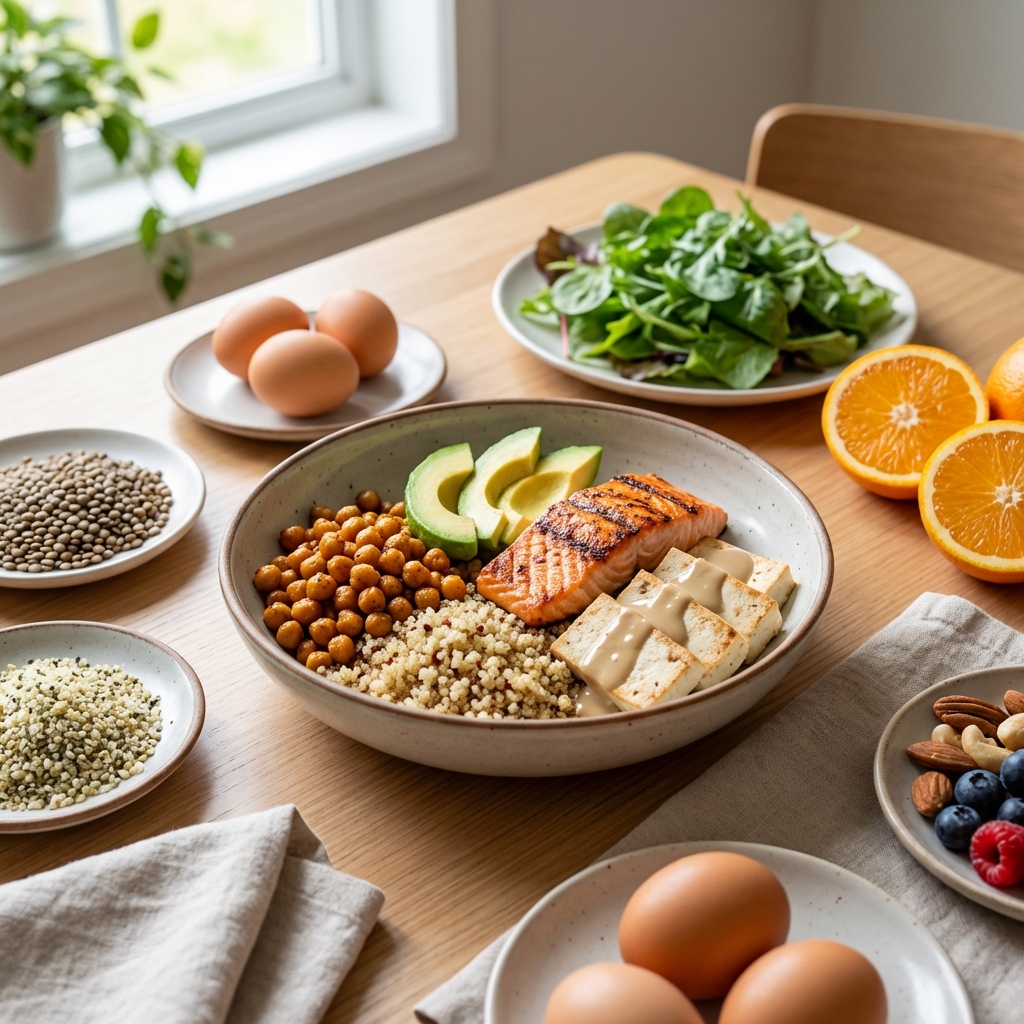
When looking for the best plant-based protein sources for women, you have plenty of delicious options. Plant-based proteins offer several advantages: they're great sources of fiber, unsaturated fats, and B vitamins, which support heart health and promote healthy weight across the lifespan. They're naturally abundant in lentils, chickpeas, black beans, edamame, quinoa, chia seeds, and even certain vegetables (UCI Health, 2024).
However, plant proteins aren't perfect for every situation. They may not always be easy to digest, and the balance and absorption of amino acids from them may not supply the nutritional needs of all women, especially at times when protein demands are high—such as during pregnancy, recovery from illness or injury, and building or strengthening lean muscle mass to prevent osteoporosis (UCI Health, 2024).
The amino acid glycine, needed at elevated levels during pregnancy, primarily comes from animal proteins, though it can also be found in seeds and legumes in lower concentrations. Plant proteins are, however, a rich source of folate, which is critical before and during pregnancy to prevent neural tube defects in the developing fetus.
Protein and Women's Unique Life Stages
Pregnancy dramatically increases protein demands to support the developing fetus and expansion of uterine and placental tissues. Some studies suggest the body may need around 0.68 grams of protein per pound of body weight during the third trimester, while other researchers believe the number could be much higher at around 1.5 grams per pound in the final trimester (Ask The Scientists, 2025).
During pregnancy, eating plenty of protein can help stave off cravings. Proteins, when eaten in combination with whole grains and complex carbohydrates, help you feel full and satisfied after a meal. This well-rounded approach also helps maintain consistent blood sugar levels, which may help reduce the risk of gestational diabetes during pregnancy (UCI Health, 2024).
After menopause, women's estrogen levels drop, which can lead to increased risk of bone loss. By eating plenty of protein, engaging in resistance training, and staying active, women can help prevent bone loss (Ask The Scientists, 2025). Establishing a regular resistance exercise program throughout early adult years coupled with adequate protein intake helps increase muscle mass which, in turn, can help prevent bone loss during and after menopause (UCI Susan Samueli Integrative Health Institute).
The Frailty Connection
A particularly compelling study from the Women's Health Initiative examined the relationship between protein intake and incident frailty in 24,417 women aged 65-79. The research found that higher protein intake may have a role in frailty prevention (PMC, 2010).
In the study, the mean protein intake was 1.2 grams per kilogram per day in the upper quintile of intake, representing a 50% increase over the current recommended dietary allowance of 0.8 grams per kilogram per day. Intervention studies support protein supplementation as an approach to reduce losses in muscle mass and improve health outcomes among elderly individuals. A meta-analysis of 55 trials reported a 34% reduction in mortality with oral protein supplementation in hospitalized patients.
Practical Protein Strategies for Busy Women
The research is clear, but implementation is where most women struggle. Here are evidence-based strategies that actually work:
- Start your day with protein. Instead of grabbing just coffee and toast, include eggs, Greek yogurt, or a protein smoothie. This sets the pattern for steady energy throughout the day.
- Make protein the center of each meal. Build your lunch and dinner around a palm-sized portion of protein—whether that's beans, lentils, fish, chicken, or tofu—then add vegetables and whole grains.
- Snack smart. Instead of reaching for chips or crackers when hunger hits at 3 PM, try nuts, hummus with vegetables, or cheese with fruit. These protein-rich options provide sustained energy without the crash.
- Diversify your sources. Don't rely on the same protein day after day. Mix plant and animal sources to get a broader range of nutrients and amino acids.
The Bottom Line
The current protein conversation isn't just another passing food fad. It's rooted in solid research showing that adequate protein intake—particularly from plant sources—significantly impacts women's health across the lifespan.
From supporting hormones and metabolism to preserving muscle mass and preventing chronic disease, protein plays a crucial role that many women have been unknowingly neglecting. The good news? It's never too late to start prioritizing protein in your diet.
You don't need expensive supplements or complicated meal plans. You just need awareness of how much you're actually consuming and a commitment to including quality protein sources at each meal.
Your future self—with strong bones, maintained muscle mass, sharp cognitive function, and reduced chronic disease risk—will thank you for paying attention to this not-so-trendy trend.
Frequently Asked Questions
Does eating protein make women look bulky?
Not at all. Women typically don't have the testosterone levels required to build massive, bulky muscles simply from eating protein. Instead, a higher protein intake helps you develop and maintain lean muscle, which creates a toned appearance, boosts your metabolism, and protects your joints as you age.
What are the signs of not eating enough protein?
Your body will usually give you subtle clues if you are falling short. Common signs include feeling unusually fatigued, experiencing frequent hunger or sugar cravings, thinning hair, brittle nails, and a noticeable loss in muscle strength during everyday activities.
Is the RDA for protein enough for women?
The standard Recommended Dietary Allowance (RDA) of 0.8 grams per kilogram of body weight is just the absolute minimum required to prevent a nutritional deficiency. It is not necessarily the optimal amount for feeling your best, preserving muscle, or supporting healthy hormones—especially for active women or those entering menopause.
How much protein should I eat per meal to maximize absorption?
Research suggests aiming for about 20 to 30 grams of protein per meal. Spreading your intake evenly throughout the day helps your body efficiently use those amino acids for muscle maintenance and keeps your energy levels stable from morning until night.
References:
- Evie. (2025). Beyond Muscles: How Protein Powers Women's Health.
- NBC News. (2024). Protein from plants and beyond may help prevent many types of chronic disease in women.
- Tufts University. (2024). Diets Rich in Plant Protein May Help Women Stay Healthy as They Age.
- UCI Health. (2024). Protein is essential for women's health.
- Ask The Scientists. (2025). How Protein Consumption Boosts Women's Health Across All Ages.
- Atlantic Health. The Power of Protein: Why Women Need More Than They Think.
- PMC. (2024). Evenness of Dietary Protein Intake Is Positively Associated with Lean Mass and Strength in Healthy Women.
- PMC. (2010). Protein Intake and Incident Frailty in the Women's Health Initiative Observational Study.
- UCI Susan Samueli Integrative Health Institute. Nutrition for Women's Health: Focus on Protein.
- Lifeway Kefir. (2025). The Benefits of Adequate Protein and Strength Training for Women's Health.
Medical Disclaimer: This article is for informational purposes only and does not constitute medical advice. Always consult a qualified healthcare provider.
Frequently Asked Questions
Does eating protein make women look bulky?
Not at all. Women typically don't have the testosterone levels required to build massive, bulky muscles simply from eating protein. Instead, a higher protein intake helps you develop and maintain lean muscle, which creates a toned appearance, boosts your metabolism, and protects your joints as you age.
What are the signs of not eating enough protein?
Your body will usually give you subtle clues if you are falling short. Common signs include feeling unusually fatigued, experiencing frequent hunger or sugar cravings, thinning hair, brittle nails, and a noticeable loss in muscle strength during everyday activities.
Is the RDA for protein enough for women?
The standard Recommended Dietary Allowance (RDA) of 0.8 grams per kilogram of body weight is just the absolute minimum required to prevent a nutritional deficiency. It is not necessarily the optimal amount for feeling your best, preserving muscle, or supporting healthy hormones—especially for active women or those entering menopause.
How much protein should I eat per meal to maximize absorption?
Research suggests aiming for about 20 to 30 grams of protein per meal. Spreading your intake evenly throughout the day helps your body efficiently use those amino acids for muscle maintenance and keeps your energy levels stable from morning until night.