You're Sleeping 8 Hours and Still Exhausted—Here's What Your Sleep Is Missing
Health Focus Team
Published
Still exhausted after 8 hours of sleep? The real issue is sleep quality, not duration. Discover the hidden causes and how to fix your sleep architecture.
Written by: Health Focus Research Team Medically Reviewed by: Dr. Sarah Chen, MD, PhD – Board-Certified Neurologist & Sleep Medicine Specialist Last updated: February 28, 2026 | Reading time: 9 minutes
⚠️ Medical Disclaimer: This article is for educational purposes only. Chronic fatigue despite adequate sleep may indicate underlying medical conditions including sleep apnea, thyroid disorders, or anemia. Please consult a physician for evaluation.
You did everything right. Eight hours in bed. Phone on the nightstand by 10 PM. Blackout curtains drawn. You even bought that premium mattress everyone in your office recommended.
If you find yourself asking, "Why am I still exhausted after 8 hours of sleep?" you're not imagining it. And you're far from alone. A 2025 survey found that nearly 40% of adults in both the US and UK report waking up tired after 8 hours of sleep. When looking at sleep quality vs sleep duration, the problem usually isn't how long you're sleeping. It's how well you're sleeping.
Welcome to the world of sleep architecture—and once you understand it, you'll never look at your eight hours the same way again.
Sleep Architecture: The Blueprint Your Body Follows
Your brain doesn't just "turn off" when you sleep. It cycles through distinct stages in a predictable architectural pattern, and each stage serves a specific biological purpose.
Stage 1 (N1): The lightest stage. You're drifting off, easily woken. This lasts only a few minutes and accounts for about 5% of total sleep time.
Stage 2 (N2): Moderate sleep. Your body temperature drops, heart rate slows, and the brain begins processing the day's memories. This makes up roughly 45-55% of your sleep and acts as a bridge between lighter and deeper stages.
Stage 3 (N3 / Deep Sleep): This is the stage you're probably missing. Deep sleep, or slow-wave sleep, is when your body does its heaviest repair work. Growth hormone surges, muscles rebuild, the immune system strengthens, and the brain's glymphatic system activates—literally flushing out metabolic waste products, including the beta-amyloid plaques associated with Alzheimer's disease. Deep sleep should comprise 15-25% of your sleep, mostly concentrated in the first half of the night.
REM Sleep: Rapid eye movement sleep is where dreams happen, emotional processing occurs, and creative problem-solving takes place. Your brain is nearly as active during REM as when you're awake, but your body is temporarily paralyzed to prevent you from acting out dreams. REM should make up 20-25% of your sleep and predominantly occurs in the second half of the night.
A healthy night of sleep cycles through these stages four to six times, with each cycle lasting about 90 minutes. The early cycles are rich in deep sleep; the later ones are rich in REM. Disrupting this architecture—even while technically spending eight hours in bed—can leave you feeling devastated the next day.
The Deep Sleep Crisis
Here's the uncomfortable truth: modern lifestyles are systematically destroying deep sleep—the stage we need most for physical restoration.
Deep sleep naturally declines with age. By your 40s, you may get 60-70% less deep sleep than you did in your 20s. By your 60s, some people get almost none. This isn't just a nuisance—researchers believe declining deep sleep is a driver of age-related cognitive decline, not just a consequence of aging.
But age isn't the only thief. Several modern habits specifically target deep sleep:
Alcohol. That glass of wine might help you fall asleep faster, but it suppresses deep sleep and fragments REM throughout the night. Even moderate alcohol consumption—two drinks—reduces sleep quality by 24%, according to a study from the Finnish Institute of Occupational Health. The sedation alcohol causes is not the same as natural sleep. You're essentially unconscious, not sleeping.
Late-night eating. Eating a large meal within three hours of bedtime forces your body to prioritize digestion over deep restorative sleep. Your core body temperature rises (it needs to drop for deep sleep), and insulin spikes interfere with growth hormone release. That midnight snack is stealing your most restorative sleep stage.
Screen light. Blue light from phones, tablets, and laptops suppresses melatonin production by up to 50% and delays the circadian signal that initiates deep sleep. Using your phone in bed isn't just keeping you awake longer—it's reducing the quality of the sleep you do get.
Caffeine's hidden half-life. Caffeine has a half-life of five to seven hours. That afternoon coffee at 3 PM means roughly half the caffeine is still in your system at 9 PM. Even if you fall asleep fine, caffeine reduces deep sleep by up to 20%. You don't feel wired, but your brain can't descend into the deepest, most restorative stages.
Chronic stress. Ever felt tired but wired at bedtime? Elevated cortisol prevents the brain from transitioning into deep sleep. If your mind is racing with tomorrow's to-do list, your nervous system is too activated for the deep relaxation that slow-wave sleep requires. This is one of the most common feeling tired even after a full night's sleep causes we see today.
Why REM Matters More Than You Think
While deep sleep handles physical restoration, REM sleep is where your emotional and cognitive health gets maintained.
During REM, your brain processes emotional experiences from the day, essentially "detoxifying" difficult emotions. Research by Matthew Walker at UC Berkeley shows that REM sleep strips the emotional charge from difficult memories, allowing you to remember events without being overwhelmed by the feelings associated with them.
This is why sleep deprivation makes you emotionally volatile. Without adequate REM, you're carrying yesterday's emotional baggage into today. Insufficient REM has been linked to anxiety disorders, depression, PTSD, and reduced emotional resilience.
REM is also when creative connections happen. The brain combines disparate pieces of information in novel ways during REM, which is why you sometimes wake up with solutions to problems you were stuck on. Many breakthrough scientific insights and creative works have been attributed to REM-stage dreaming.
What disrupts REM specifically:
Alarm clocks are REM's worst enemy. Since REM concentrates in the latter hours of sleep, waking up early cuts into your most REM-rich cycles. Cannabis suppresses REM significantly—regular users often report not dreaming, which reflects dramatically reduced REM sleep. Antidepressants (particularly SSRIs) also suppress REM, which may partially explain the emotional blunting some users experience.
How to Tell If Your Sleep Architecture Is Broken
You don't necessarily need a sleep lab to recognize disrupted sleep architecture. Here are telltale signs:
You sleep eight hours but feel unrested. You feel physically tired but mentally wired at bedtime. You wake up multiple times during the night—even briefly. You never remember your dreams (suggesting poor REM). You feel emotionally fragile or reactive during the day. You crave sugar and simple carbs (your body compensating for missed deep sleep restoration). You get sick frequently (immune system compromised by insufficient deep sleep). You can't concentrate despite adequate sleep duration.
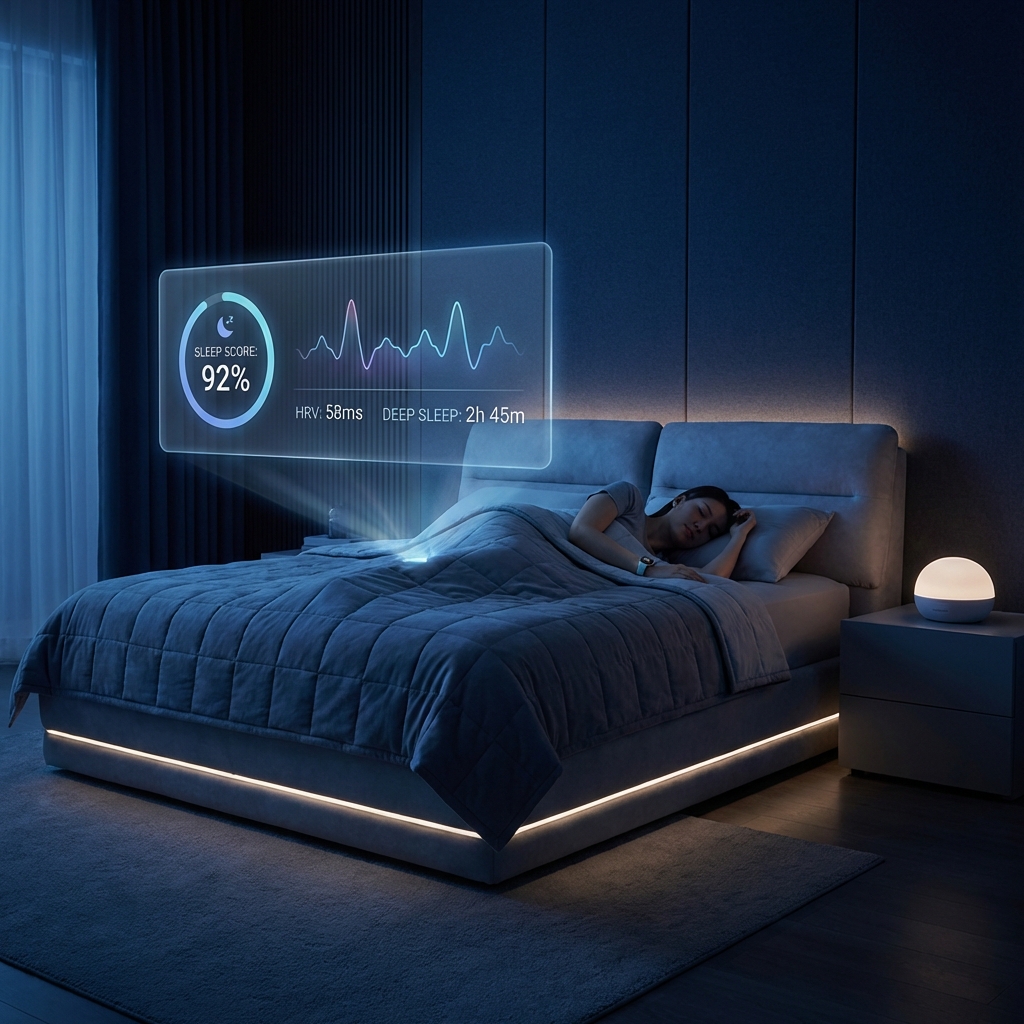
Wearable devices like the Oura Ring, Apple Watch, and WHOOP now track sleep stages with reasonable accuracy. While not as precise as a clinical polysomnography, they can show you patterns over time—like consistently low deep sleep percentages or fragmented sleep cycles.
The Science-Backed Sleep Architecture Fix: How to Feel More Rested After Sleeping 8 Hours
Fixing sleep architecture isn't about spending more time in bed. It's about creating the conditions for your brain to cycle properly through all stages.
Anchor your wake time. The single most powerful thing you can do for sleep quality is wake up at the same time every day—including weekends. This sets your circadian clock and ensures proper timing of sleep stages. Your body will naturally adjust your bedtime, but the wake time is the anchor.
Get morning sunlight. Exposure to bright light within the first hour of waking sets your circadian clock and triggers a cortisol pulse that starts the 14-16 hour countdown to melatonin release. Even 10 minutes of outdoor light on a cloudy morning is more effective than an hour of indoor lighting.
Create a temperature gradient. Your core body temperature needs to drop 1-2 degrees Fahrenheit to initiate deep sleep. A cool bedroom (65-68°F / 18-20°C) facilitates this. A warm shower or bath 60-90 minutes before bed can paradoxically help—the subsequent cooling as blood vessels dilate accelerates the temperature drop that triggers sleep onset.
Create a 90-minute wind-down buffer. The transition from waking to sleeping isn't a switch—it's a gradual process. Dim lights, stop stimulating activities, and allow your nervous system to downshift for at least 60-90 minutes before your target sleep time.
Time your caffeine cutoff. Stop caffeine consumption by 1-2 PM if you go to bed around 10 PM. If you're sensitive to caffeine, noon is better. Morning coffee is fine and potentially beneficial—afternoon coffee is sabotaging your deep sleep.
Exercise—but time it right. Regular exercise, particularly strength training and aerobic activity, significantly increases deep sleep. However, intense exercise within two to three hours of bedtime can elevate core temperature and cortisol, interfering with sleep onset. Morning and afternoon workouts provide the most sleep benefit.
Address sleep apnea if you snore. People often wonder, "Can sleep apnea cause fatigue despite sleeping 8 hours?" Absolutely. An estimated 80% of moderate to severe sleep apnea cases are undiagnosed. If you snore, wake up gasping, or consistently feel unrested despite adequate time in bed, get evaluated. Sleep apnea destroys sleep architecture by causing dozens or hundreds of micro-arousals per night that prevent progression into deep sleep and REM.
The Nap Strategy
Strategic napping can supplement nighttime sleep architecture, but timing matters.
A 20-minute nap between 1-3 PM captures mostly Stage 2 sleep—beneficial for alertness and performance without interfering with nighttime sleep. A 90-minute nap captures a full sleep cycle including deep sleep and REM—useful for recovery after a poor night, but risky for nighttime sleep if taken too late.
Never nap after 3 PM unless you're planning to compensate by going to bed later. Late naps reduce sleep pressure and make it harder to fall into deep sleep at your normal bedtime.
Your Sleep Isn't Failing You—Your Habits Are
The cultural narrative around sleep has been "just get more of it." But for millions of people getting adequate duration, the problem has never been quantity—it's been quality. An eight-hour block of fragmented, architecturally disrupted sleep can leave you more tired than six hours of properly structured sleep.
Your brain wants to cycle through these stages in the right order, for the right durations, at the right times. When you give it the conditions to do so—consistent timing, cool temperature, minimal disruptions, appropriate wind-down—it will do the work of restoration, repair, and emotional processing that makes you feel genuinely rested.
Stop counting hours. Start building architecture.
Frequently Asked Questions
Why am I still exhausted after 8 hours of sleep? You are likely experiencing poor sleep architecture. Even if you spend 8 hours in bed, disruptions to your deep sleep and REM cycles—caused by factors like stress, alcohol, or late-night screen time—will leave you waking up feeling totally drained.
Can sleep apnea cause fatigue despite sleeping 8 hours? Yes. Sleep apnea causes breathing to stop and start throughout the night, leading to micro-arousals. You might not remember waking up, but these constant interruptions prevent your brain from reaching restorative deep and REM sleep stages, explaining why you wake up exhausted regardless of how early you went to bed.
Are there hidden health issues causing fatigue after a full night's sleep? Beyond sleep apnea, feeling chronically exhausted despite adequate sleep can be a red flag for underlying health issues. Conditions like thyroid disorders (hypothyroidism), anemia, vitamin D deficiency, or clinical depression often mask themselves as sleep problems. Always consult your doctor if healthy sleep habits don't fix the exhaustion.
How do I improve my sleep quality to stop waking up tired? Start by anchoring your wake time to be exactly the same every day, limiting afternoon caffeine, keeping your bedroom cool, and exposing your eyes to natural sunlight within an hour of waking up. Focusing on sleep quality vs sleep duration is the real secret to getting your energy back.
References:
- Walker, M. (2017). Why We Sleep: Unlocking the Power of Sleep and Dreams. Scribner.
- Nedergaard, M. (2013). Glymphatic System Function During Sleep. Science.
- Pietilä, J., et al. (2018). Effect of Alcohol on Sleep Quality. JMIR Mental Health.
- American Academy of Sleep Medicine. (2025). Sleep Architecture and Age-Related Changes.
- Xie, L., et al. (2013). Sleep Drives Metabolite Clearance from the Adult Brain. Science.
- Chang, A.M., et al. (2015). Evening Use of Light-Emitting Screens Negatively Affects Sleep. PNAS.
Medical Disclaimer: This article is for informational purposes only and does not constitute medical advice. Always consult a qualified healthcare provider.
Frequently Asked Questions
Why am I still exhausted after 8 hours of sleep?
You are likely experiencing poor sleep architecture. Even if you spend 8 hours in bed, disruptions to your deep sleep and REM cycles—caused by factors like stress, alcohol, or late-night screen time—will leave you waking up feeling totally drained.
Can sleep apnea cause fatigue despite sleeping 8 hours?
Yes. Sleep apnea causes breathing to stop and start throughout the night, leading to micro-arousals. You might not remember waking up, but these constant interruptions prevent your brain from reaching restorative deep and REM sleep stages, explaining why you wake up exhausted regardless of how early you went to bed.
Are there hidden health issues causing fatigue after a full night's sleep?
Beyond sleep apnea, feeling chronically exhausted despite adequate sleep can be a red flag for underlying health issues. Conditions like thyroid disorders (hypothyroidism), anemia, vitamin D deficiency, or clinical depression often mask themselves as sleep problems. Always consult your doctor if healthy sleep habits don't fix the exhaustion.
How do I improve my sleep quality to stop waking up tired?
Start by anchoring your wake time to be exactly the same every day, limiting afternoon caffeine, keeping your bedroom cool, and exposing your eyes to natural sunlight within an hour of waking up. Focusing on sleep quality vs sleep duration is the real secret to getting your energy back.