Healthy Habits for 2026: Simple New Year Resolutions You Can Actually Keep
Health & Wellness Team
Published

Discover why traditional New Year's resolutions fail and how to stick to your goals by building a foundation of sustainable health with simple micro-habits for 2026.
Written by: Health Focus Research Team Medically Reviewed by: Dr. Priya Sharma, MBBS, MD – Board-Certified Endocrinologist & Health Specialist Last updated: February 28, 2026 | Reading time: 8 minutes
⚠️ Medical Disclaimer: This article is for educational purposes only and is not a substitute for professional medical advice. Always consult a qualified healthcare provider.
Introduction: The Promise of a Healthier You in 2026
As the calendar turns towards a new year, the familiar promise of a fresh start beckons. We envision a better version of ourselves—healthier, more energetic, and at peace. For 2026, the goal isn't just to set ambitious goals, but to focus on simple New Year resolutions you can actually keep.
If you're wondering how to stick to your New Year's resolutions, the secret isn't a dramatic lifestyle overhaul. It's about building sustainable health habits through small, intelligent choices that compound over time, creating lasting change you can actually feel.
Beyond Broken Resolutions: Why This Year Will Be Different
The cycle of setting and abandoning resolutions is a common experience. We begin with a surge of motivation, only to see it fizzle out by February. The problem isn't a lack of willpower; it's the approach.
This year, we're trading guilt-ridden resolutions for a strategy grounded in the science of habit formation. We will focus on consistency over intensity, progress over perfection, and building a routine that serves your long-term health—not just a short-term goal.
Why Do New Year's Resolutions Fail? (and How to Avoid the Trap)
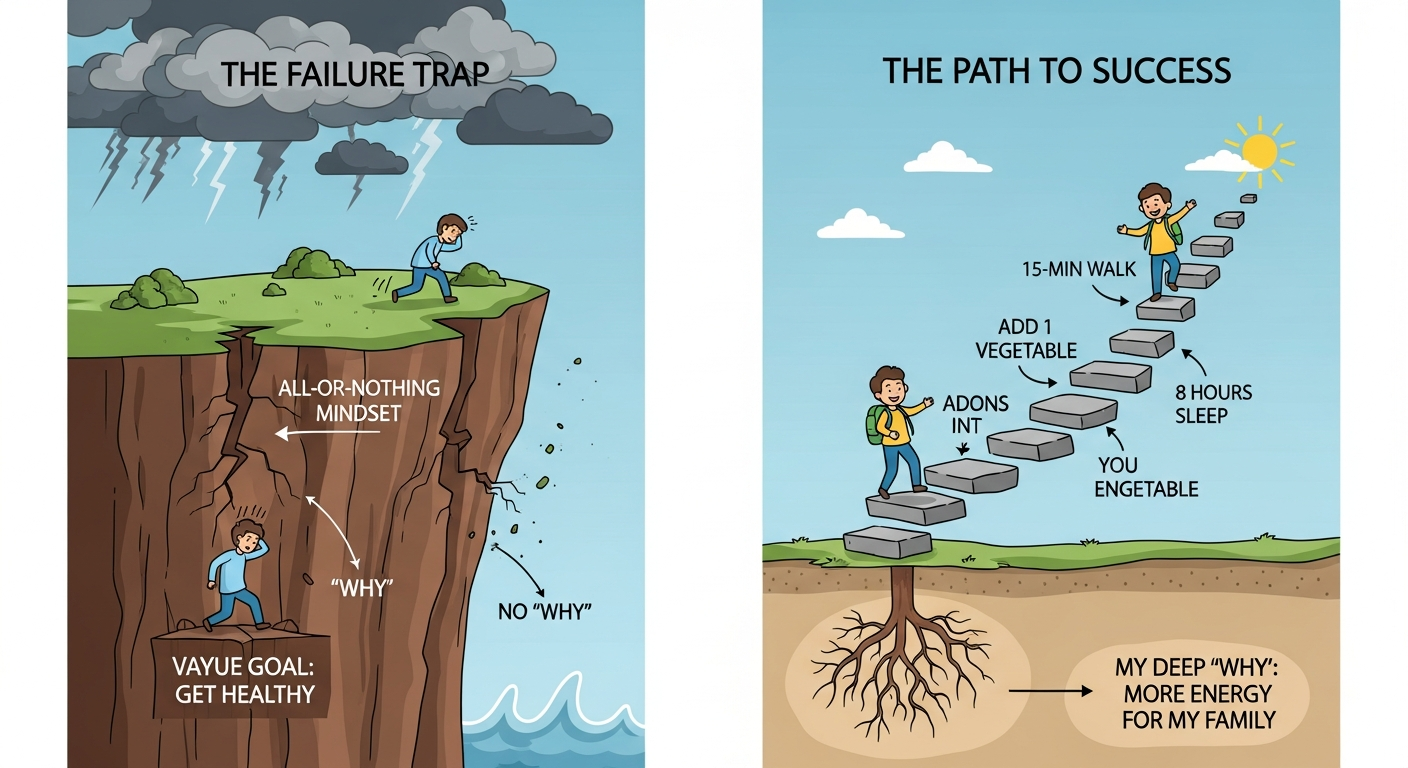
Before building a successful system for change, it's crucial to understand why the traditional approach so often fails. The typical New Year's resolution is practically designed for failure, built on a foundation of unrealistic expectations and flawed psychology.
By identifying these common traps, you can sidestep them in 2026.
The "All or Nothing" Mindset: A Recipe for Burnout
Many resolutions are framed with rigid, unforgiving rules: "I will go to the gym five days a week" or "I will never eat sugar again." This all-or-nothing thinking creates immense pressure.
The moment you miss a gym session or eat a cookie, it can feel like total failure. This single misstep often leads to abandoning the goal altogether, reinforcing the belief that you can’t stick to your commitments.
Focusing on Abstract Goals vs. Concrete Behaviors
Goals like "get healthier" or "reduce stress" are admirable but vague. They lack a clear, actionable path.
Without a specific behavior—such as "take a 15-minute walk during lunch"—the goal remains an abstract wish. Lasting change is built on concrete actions, not broad aspirations.
Lack of a Deeply Rooted "Why"
Resolutions driven by social pressure or fleeting motivation rarely last. A goal to "lose 10 pounds" is less powerful than a desire to "have more energy for daily life" or "support long-term heart health."
A meaningful personal reason is what sustains habits when motivation fades.
The "Anti-Resolution" Approach: Micro-Habits for Macro-Results
The key to a healthier 2026 lies in rejecting extreme resolutions and embracing small, incremental changes.
This anti-resolution approach focuses on building micro-habits for the new year—actions so small they’re easy to repeat—creating momentum that leads to lasting improvements in wellbeing. By keeping the barrier to entry low, you bypass the brain's resistance to change.
The Science of Small Wins
Completing small tasks triggers dopamine micro-habits loops. Each tiny success releases dopamine, rewarding your brain and reinforcing the positive behavior. Over time, these small wins reshape your identity—you stop trying to be healthy and start living healthfully.
Effortless Integration Through Habit Stacking
Habit stacking pairs a new behavior with an existing routine, letting you anchor a new goal to something you already do every day.
Here are a few habit stacking examples to try:
- Morning: After brushing your teeth → drink one full glass of water.
- Workday: After closing your laptop for lunch → take five deep breaths.
- Evening: After turning off the TV → write down one thing you are grateful for.
This strategy removes friction and makes healthy habits automatic.
Flexibility Over Perfection
Missed days aren’t failures. Micro-habits make restarting easy and encourage self-compassion. Consistency matters more than perfection.
Foundational Habits for a Thriving 2026
Long-term wellbeing rests on a few core pillars: rest, hydration, nutrition, and movement.
Prioritizing Rest
Sleep supports energy, focus, immunity, and mood. Begin by shifting bedtime by just 15 minutes and creating a calming evening routine.
Hydration as a Daily Reset
Drinking a glass of water in the morning is one of the simplest habits to support energy and focus. Keep water nearby throughout the day as a visual cue.
Mindful Nutrition
Instead of restriction, focus on nourishment. Adding vegetables, eating regular meals, and prioritizing protein supports sustainable health.
Movement as Care, Not Punishment
Movement should feel supportive, not forced. A daily walk, gentle stretching, or enjoyable activities like yoga or dancing can make consistency easy.
Cultivating Mental and Emotional Wellbeing
True health includes emotional balance and stress management.
Mindful Moments
Brief breathing exercises, pauses between tasks, or time outdoors help calm the nervous system and reduce daily stress.
Gratitude and Positive Awareness
Noticing one positive moment each day trains the mind toward resilience and emotional balance.
Digital Boundaries
Reducing screen time before bed improves sleep quality and mental clarity.
Making Habits Stick Long-Term
Tracking progress, seeking support, and reframing setbacks as feedback help habits last.
Celebrate small wins and adjust when needed—habits evolve with life.
Your Personal Habit Blueprint for 2026
Start with one or two focus areas. Apply the two-minute rule to overcome resistance and remember this is a lifestyle—not a deadline.
Conclusion
A healthier 2026 isn’t built on extreme resolutions—it’s built on small, repeatable choices.
One glass of water.
One walk.
One mindful breath.
Choose your first habit today and begin creating a routine that supports your wellbeing far beyond January.
Frequently Asked Questions
Why do most New Year's resolutions fail? Most resolutions fail because they are too ambitious, vague, or based on an "all-or-nothing" mindset. When people rely entirely on motivation rather than building sustainable systems, they quickly burn out the moment they encounter a setback.
What are micro-habits? Micro-habits are tiny, low-effort behaviors that require minimal willpower to complete. Because they are "too small to fail" (like drinking one glass of water or reading a single page of a book), they help bypass the brain's resistance to change and easily become automatic.
How do I stick to my New Year's resolutions? To stick to your resolutions, break large goals into actionable micro-habits. Use strategies like habit stacking—attaching a new behavior to an existing routine—and focus on consistency instead of perfection. Tracking your progress and celebrating small wins can also keep you motivated long-term.
What are the best healthy habits to start for beginners? Beginners should focus on foundational health pillars. Some of the best habits include drinking a glass of water first thing in the morning, taking a brief 10-minute daily walk, and setting aside a few minutes for deep breathing or mindfulness to reduce daily stress.
Medical Disclaimer
This content is for informational purposes only and does not constitute medical advice. Always consult a qualified healthcare professional for personal health concerns.
Medical Disclaimer: This article is for informational purposes only and does not constitute medical advice. Always consult a qualified healthcare provider.
Frequently Asked Questions
Why do most New Year's resolutions fail?
Most resolutions fail because they are too ambitious, vague, or based on an "all-or-nothing" mindset. When people rely entirely on motivation rather than building sustainable systems, they quickly burn out the moment they encounter a setback.
What are micro-habits?
Micro-habits are tiny, low-effort behaviors that require minimal willpower to complete. Because they are "too small to fail" (like drinking one glass of water or reading a single page of a book), they help bypass the brain's resistance to change and easily become automatic.
How do I stick to my New Year's resolutions?
To stick to your resolutions, break large goals into actionable micro-habits. Use strategies like habit stacking—attaching a new behavior to an existing routine—and focus on consistency instead of perfection. Tracking your progress and celebrating small wins can also keep you motivated long-term.
What are the best healthy habits to start for beginners?
Beginners should focus on foundational health pillars. Some of the best habits include drinking a glass of water first thing in the morning, taking a brief 10-minute daily walk, and setting aside a few minutes for deep breathing or mindfulness to reduce daily stress.